Updates from the Palouse
The sunshine and warmer temperatures that accompany a change of seasons suggests a time of renewal, change, and hope. Despite the unique challenges facing higher education, I’m filled with continued optimism that our efforts to positively impact the health of communities across Washington and the Pacific Northwest will be sustainable. It’s with that confidence that I’m happy to offer our Spring 2025 newsletter.
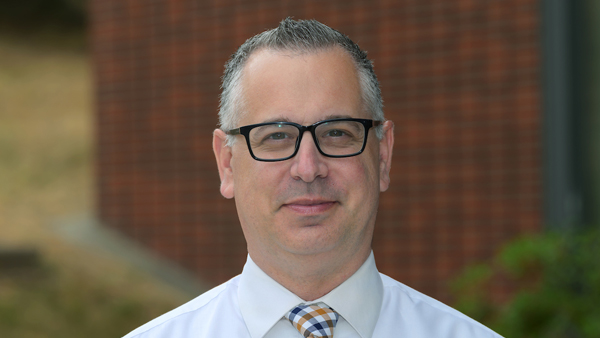
Todd Sabato
Associate Professor
Director of Communication & External Affairs
Public Health Degree Programs
Paul G. Allen School for Global Health
Curricular updates
Led by Director of Academic Programming and Student Success, Dr. Kimberly McBride, and College of Veterinary Medicine Associate Dean for Undergraduate Education, Dr. Samantha Gizerian, a series of curricular proposals were submitted to and approved by WSU’s Faculty Senate. Adjusting both the course content and numbering will aid us in effectively scaffolding content so that students can engage in continuous skill development and implementation of public health competencies across the curriculum. The addition of a public health minor likewise allows students from other degree programs to explore the promotion of community and population health in diverse settings.
Lastly, and most significantly, is a third academic track to accompany our current tracks in infectious disease and community and behavioral health. A new general track will give students the opportunity to complete one of 12 concentrations in addition to their required public health courses. These 18 to 21 credit hour concentrations, including options in environmental policy, One Health, and health communications, will enable students to develop skills specific to their professional goals and ambitions.
Faculty and staff hires
At a time when academia faces a period of contraction, the Public Health Program is fortunate to have continually onboarded new faculty and staff. We’re excited to have completed our first series of faculty and staff hires and look forward to welcoming new colleagues to campus in the near future. Our Vancouver campus has also hired two new faculty members who will be featured in our Fall 2025 newsletter along with the newly onboarded Public Health Student Success and Experiential Learning coordinator.
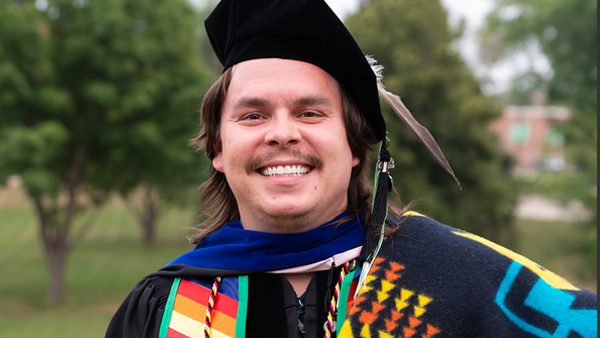
Cole Allick
Assistant Professor
Paul G. Allen School for Global Health
College of Veterinary Medicine
A citizen of the Turtle Mountain Band of Chippewa Indians and research assistant professor at WSU’s Institute for Research and Education to Advance Community Health (IREACH), Dr. Cole Allick will join the Allen School for Global Health in the role of assistant professor of public health policy. Dr. Allick is one of the first scholars globally to receive a PhD in Indigenous Health and has passionately collaborated with Indigenous communities to mitigate the impact of health disparities. An appointee to the Governor’s Dementia Action Collaborative for Washington state, Dr. Allick serves as principal investigator and co-investigator to over $20 million in funded research.
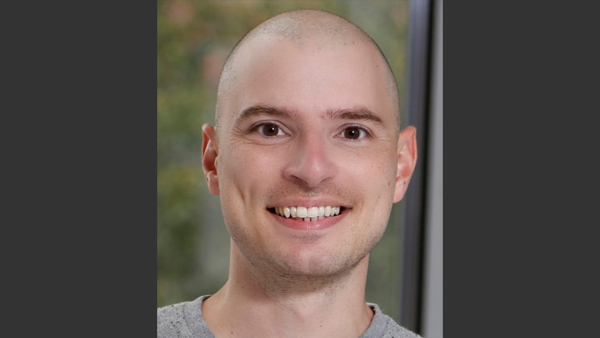
Andreas Eleftheriou
Assistant Professor
Department of Veterinary Microbiology and Pathology
College of Veterinary Medicine
Dr. Andreas Eleftheriou is a veterinarian scientist (DVM/PhD) and a diplomate of the American College of Veterinary Preventive Medicine (DACVPM). He uses a One Health systems approach to investigate the ecological, epidemiological, and social dimensions of pathogens and toxicants with medical and veterinary significance. Most of his research has focused on rodent- and tick-borne infectious diseases and heavy metal exposures to inform evidence-based prevention and mitigation strategies. His research draws from multiple fields, including veterinary medicine, public health, ecology, epidemiology, toxicology, and social sciences. Dr. Eleftheriou has also completed a small animal clinical internship at the University of Pennsylvania and a veterinary public health residency/MPH at The Ohio State University.
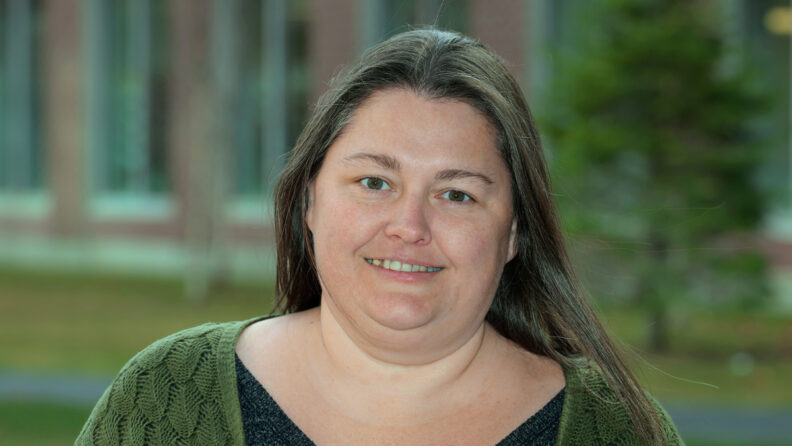
Chanelle Denman
Assistant Director of Undergraduate Education
College of Veterinary Medicine
A 10-year employee of WSU, Chanelle Denman has brought all undergraduate programs into one unit within the College of Veterinary Medicine in her role as assistant director of Undergraduate Education. Having previously worked in the Carson College of Business and Psychology Department, her extensive institutional knowledge has allowed her to seamlessly work with students, faculty, staff, and administrators. She serves as an integral liaison between Public Health Program leadership, curricular affairs, marketing and communications efforts, and student advising. When not at work, Chanelle is a dedicated parent and volunteer for her son’s ice hockey team.
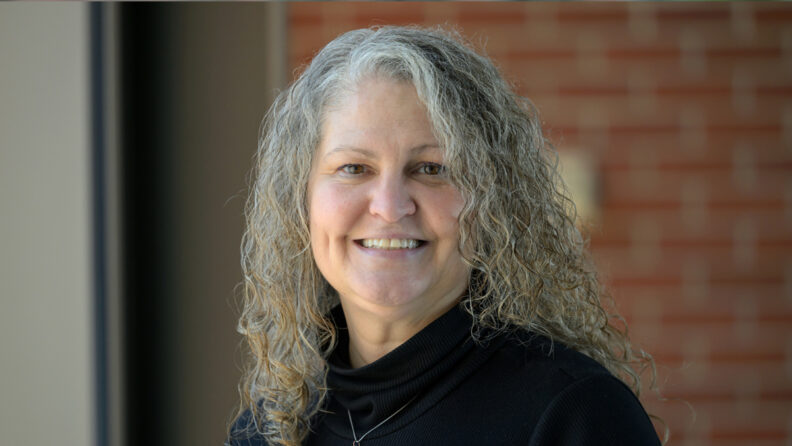
Cindy Hollenbeck
Public Health Marketing and Communications Coordinator
College of Veterinary Medicine
Cindy Hollenbeck joined Washington State University as the marketing and communications coordinator for Public Health after spending 12 years in graduate student recruitment, advancement writing, and public relations at the WSU Graduate School and WSU Foundation. Cindy served four years in the U.S. Navy and funded her undergraduate degree with the Montgomery G.I. Bill. In her role as the marketing and communications coordinator for Public Health, Cindy combines her love of visual art, creative writing, and health education to promote the Bachelor of Science in Public Health degree to current and prospective students, the WSU system, and surrounding communities.
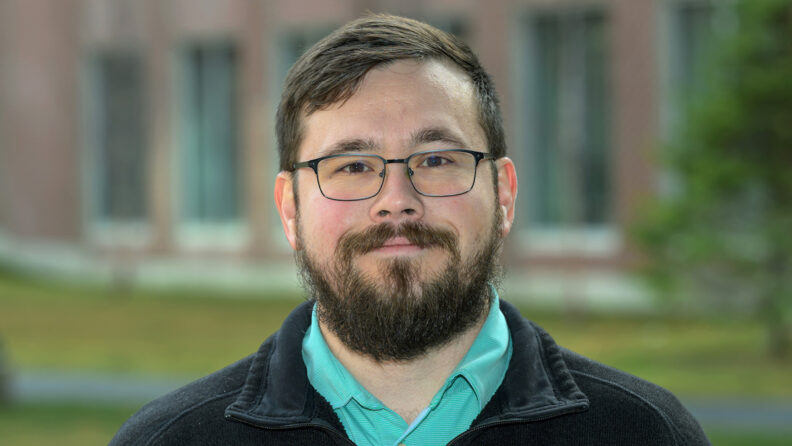
Blake Uphus
Academic Advisor
College of Veterinary Medicine
Blake Uphus joined Washington State University as the academic advisor for Public Health in November 2024. He spent his previous 11 years serving as a coach for the men’s lacrosse team at the University of Idaho. Through his time coaching, Blake discovered his passion for mentoring and guiding college students along their journeys in higher education. It is this passion for mentorship that Blake excitedly brings to the Public Health Program and its students.
Marketing and branding
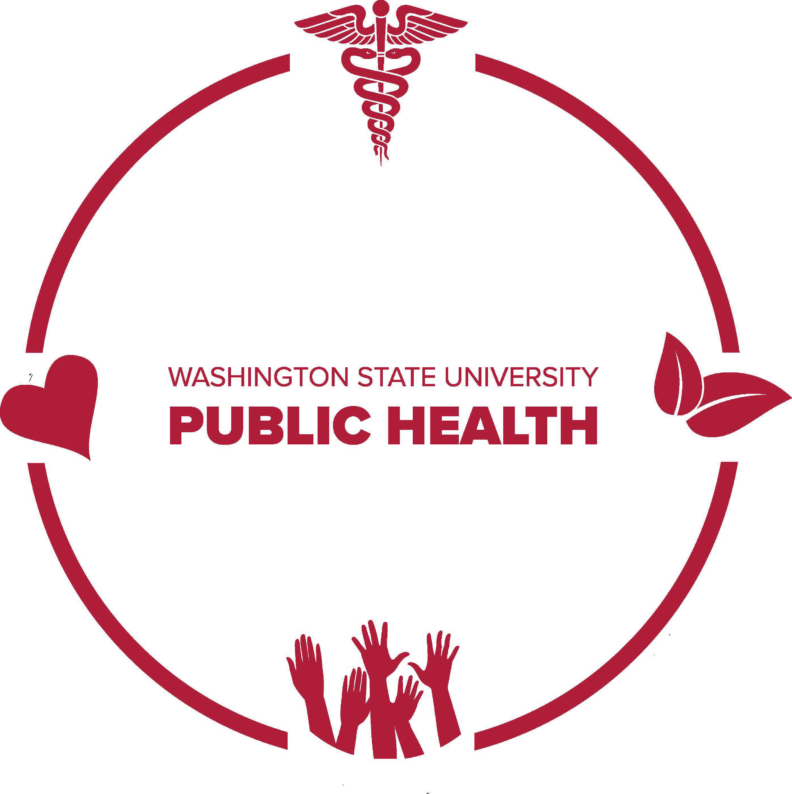
Initiated by Public Health Marketing and Communications Coordinator Cindy Hollenbeck, the Public Health Program embarked on its mission to establish a brand identity. After two months of discussion, strategic thought, and workshopping ideas with our student community, we’re proud to share our original design produced by Heather Smith from the College of Veterinary Medicine’s Communications team. Echoing the dynamic interconnection between biomedical, environmental, social, and emotional determinants of health, this design also reflects the comprehensive nature of our core curriculum. A series of promotional items, including T-shirts, sweatshirts, and drawstring bags, feature the easily identifiable design as well as the program belief that “Public Health Starts With Us.”
Community engagement
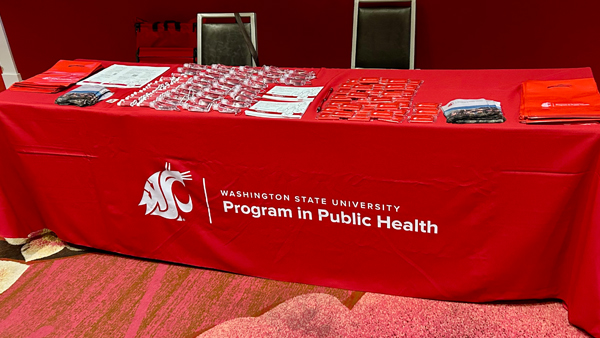
A primary goal during the first year of developing the Public Health Program involved engaging community members and health-focused organizations.
In addition to assembling an advisory board of external stakeholders representing academic, policy, tribal, applied research, and business sectors, we were a sponsor of the 2025 Northwest Rural Health Conference in Spokane. Sponsorship enabled us to directly connect with members of the medical and scientific community who will serve as preceptors for experiential learning and internship opportunities for students. We’re similarly excited to serve as a platinum sponsor of the 2025 Washington State Public Health Association Conference in October.
Shaping the future of public health
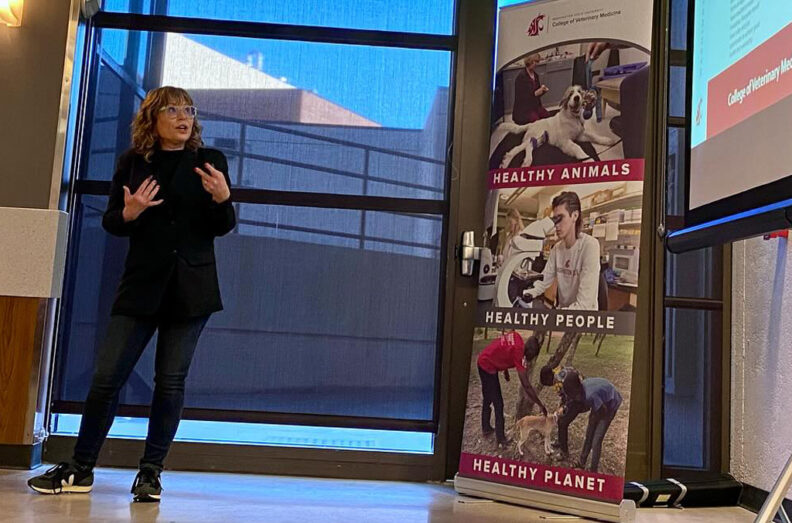
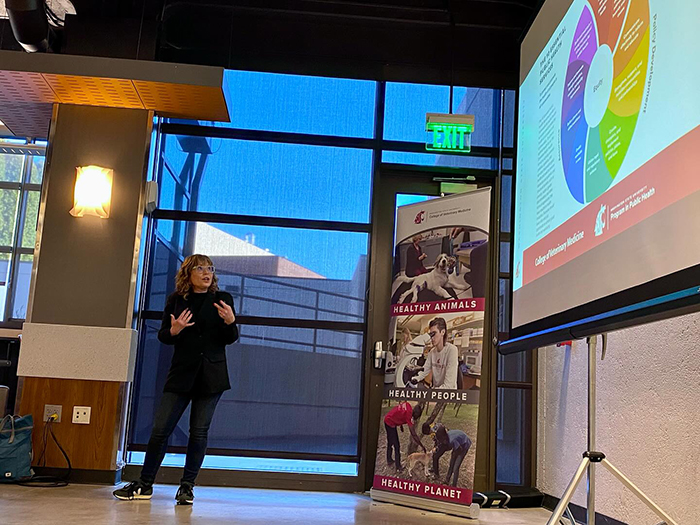
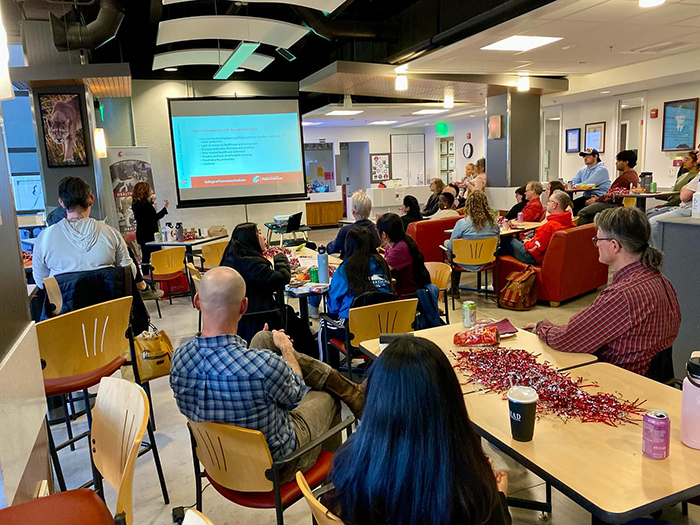
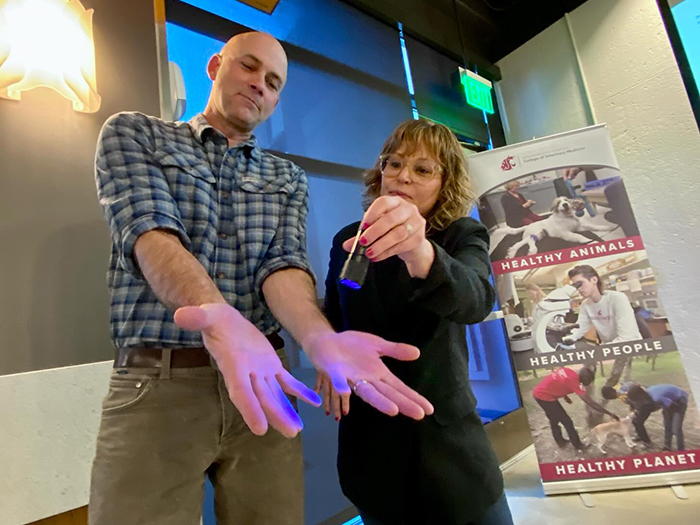
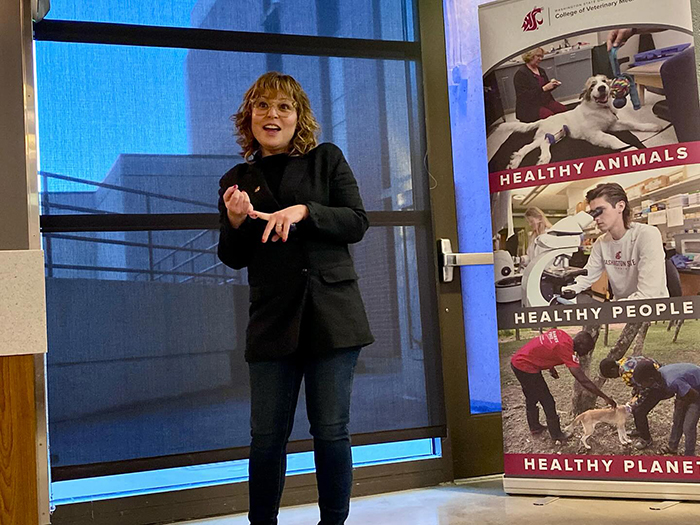
As a kickoff to National Public Health Week, Dr. Kimberly McBride presented “Tomorrow’s Heroes Start Today: Shaping the Future of Public Health.” An exploration of how today’s public health education shapes tomorrow’s leaders, Dr. McBride shared insights on how public health supports people and communities around the world through improved access to health services, preventing disease, and promoting wellness. She likewise illuminated WSU’s efforts to build innovative approaches to tackle real-world challenges and create healthier communities by developing a well-prepared workforce.
Faces in spaces
In addition to serving our students, faculty and staff are passionately engaged in efforts to advance science, research and community wellness. Research manuscripts are featured in top-tier journals, with topics including substance use disorders, racial health equity and maternal and child health. Faculty are also actively engaged in over $20 million of funded research.
Professional development opportunities
Efforts to share research findings and enhance program visibility have taken faculty and staff across the globe, including having a presence at the following conferences.
- American Public Health Association Annual Meeting & Exposition, Minneapolis, MN
- American Society of Addiction Medicine Annual Conference, Aurora, CO
- Association of Schools and Programs of Public Health Annual Meeting, Washington, DC
- Future of AI and the Health Sciences Summit, Seattle, WA
- International AIDS Society, Rwanda
- Northwest Rural Health Conference, Spokane, WA
- STI & HIV World Congress, Montreal
- Washington State Public Health Association Annual Conference, Yakima, WA
And speaking of spaces
WSU’s Public Health Program was proud to support a full remodel of advising and administrative offices in the College of Veterinary Medicine’s Biotechnology Life Sciences facility. This newly renovated space will serve as home to the Public Health Program’s advising and support staff.
Forward thinking
As the program celebrates the successes of its first year and explores future academic and collaborative opportunities, we will engage with our advisory board and invested stakeholders in a series of strategic planning efforts over the course of the 2025-26 academic year. This process will align the program mission, vision, and values with actionable strategies to address challenges, seize opportunities, and guide decisions such as resource allocation.
Likewise, we will engage state and regional tribal and Indigenous communities in collaborative dialogue related to public health, health care, and academic needs. Led by Drs. Allick and Sabato, we hope that these efforts, and the relationships we establish, will support both academic and programming proposals intended to mitigate longstanding health disparities among tribal communities.