
Spring on the Palouse means brisk mornings and sunny afternoons, final exams and thesis defenses, and commencement celebrations. Spring also means recognizing all the hard work and accomplishments of our Public Health faculty and staff. We invite you to celebrate our accomplishments and plans for the future.
Faculty notes
Dr. Cole Allick and Dr. Kim McBride have been team-teaching a Population Health class for the Nmryaqs Post-Baccalaureate Program for Enrolled Members of Federally Recognized Tribes through the Elson S. Floyd College of Medicine. Nmryaqs means “medicine road” or “path to medicine” in the Spokane dialect of Interior Salish. Participants who complete the program receive conditional acceptance to the WSU Elson S. Floyd College of Medicine. Learn more about the program.
Dr. Eka Burduli will teach CBH/PH 472, Foundations of Maternal and Infant Health in the Context of Substance, a 3-credit elective at WSU Spokane, available through VC at WSU Pullman and WSU Vancouver this fall. The course provides a foundational overview of maternal and infant health through a public health lens with a specialized focus on the impacts of substance use during the perinatal period. Students will examine how biological, behavioral, and structural factors influence the health and wellbeing of birthing people and their infants from pregnancy through the postpartum period and early infancy. Using interdisciplinary frameworks, including the life course perspective, reproductive justice, and social determinants of health, the course explores the intersection of substance use, stigma, policy, and care systems.
Dr. Andreas Eleftheriou was interviewed by the Wildlife Society about a paper in Human Dimensions of Wildlife that identified factors associated with the use of non-lead ammunition from deer hunters in New York. Read more at Taylor & Francis Online.
Read “Why do hunters choose lead ammunition?” on The Wildlife Society site.
Dr. Andrea Eleftheriou serves on the planning committee for the Washington State One Health Conference, Zoonotic and Vector-borne disease, led by the Washington State Department of Health.
Dr. Liat Kriegel, Department of Community and Behavioral Health, Elson S. Floyd College of Medicine, is the lead PI on the Spokane Periodic Assessment of Trajectories of Housing, Homelessness, and Health Study (PATHS) project. Guided by a Community Advisory Board, Spokane PATHS will collect detailed survey and interview data from a representative group of unsheltered residents as they move through different housing situations. The findings will provide the Regional Spokane Continuum of Care with high-quality data to design responsive, effective policies and programs grounded in the needs of the most vulnerable people experiencing homelessness. Co-Is are Dr. Anna Hing, Dr. Emily Leickly, and Dr. Oladunni Oluwoye. The funded amount is $150,000.
Dr. Kim McBride gave a presentation to the Department of Health Education Peer-Health Educators focusing on Bodily Autonomy and Pleasure in January.
Dr. Kim Bride led a presentation and panel at O-CON, Women’s Sexual Health Workshop and Panel, featuring WSU faculty, staff, and students in March.
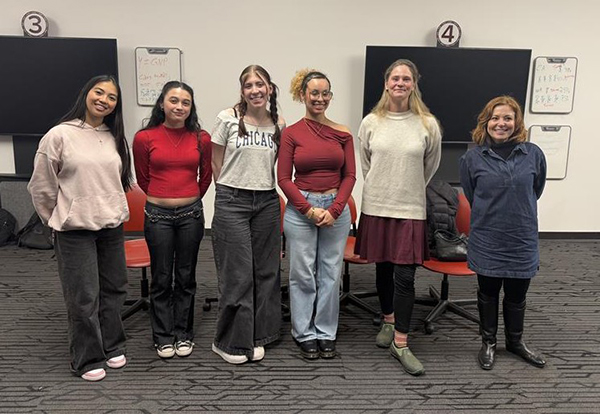
Dr. Michael McDonell, Department of Community and Behavioral Health, Elson S. Floyd College of Medicine, is the lead PI on development of the Intervention Research to End Addiction through Community Transformation (INTERACT) Center. The Center will lead community-engaged research, education, and practice to reduce—and ultimately eliminate—substance-related harms. INTERACT will build leadership, develop a strategic plan, support major grant efforts, host its inaugural summit, and strengthen statewide partnerships. Through multilevel interventions in prevention, treatment, and health promotion, the Center will improve community wellbeing and position WSU as a national leader in addiction intervention research. The funded amount is $300,000.
Dr. John Roll was promoted to Regents Professor and celebrated at the recent Showcase at WSU Pullman.
Dr. Todd Sabato was selected as one of six faculty members university-wide to serve as a 2026 Community-Engaged Scholar supported by the Provost’s Smith Grant for Teaching and Learning. Through this appointment, Dr. Sabato will launch the Rural Health Improvement Seminar (RISE), an innovative curriculum designed to strengthen partnerships with rural communities and prepare students and researchers to tackle real-world challenges in delivering rural health care.
Dr. Elizabeth Wood and Dr. Jae Kennedy (project PI) presented research on their current NIH grant about medical ableism for a Science Friday event at the Eunice Kennedy Shriver National Institute of Child Health and Human Development.
Marketing and communications
Recruitment
In collaboration with Sam Frederickson, WSU’s Southwest Washington and Oregon Admissions Counselor, Cindy Hollenbeck, marketing and communications coordinator, promoted the Public Health program at two well-attended high school recruitment events in Vancouver, Washington. The pair shared a table at Hudson Bay High School and Fort Vancouver High School Center for International Studies.
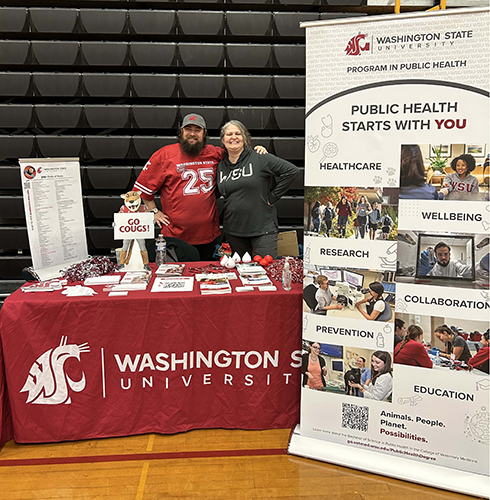
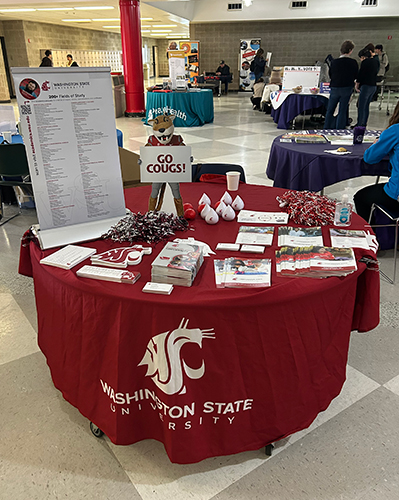
Under the advisement of Professor of Neuroscience, Dr. Sam Gazerian, and Director of Undergraduate Education, Chanelle Denman, Cindy Hollenbeck worked with the Slate team to develop a campaign to deliver text messages to 180 admitted (not committed) students in Public Health, Genetics and Cell Biology, and Microbiology. (Students opted-in to receive text communications from WSU.) Blake Uphus is the advisor for all three majors. Results of the campaign will be shared in an upcoming newsletter.
Outreach
Community engagement
Dr. Todd Sabato will partner with WSU’s Center for Civic Engagement and Office of Housing and Residence Life to develop the university’s first Community Service and Leadership Living Learning Community. Meaningful service opportunities will empower students to actively contribute to the WSU and Pullman communities while strengthening leadership, problem-solving, and experiential learning skills.
Student engagement
Dr. Kim McBride was the guest speaker at the Cougar Career Conference in April. This annual event invites students to learn more about professionalism, resume writing, interviewing, and provides important career resources.
Tribal and Indigenous
Members of the Institute for Research and Education to Advance Community Health (IREACH) team, sponsored by the partnership between WSU IREACH and the University of Washington Alzheimer’s Disease Research Center (ADRC), supported the Elder’s Holiday
Luncheon at Goldfinch Elder Housing in Seattle. The luncheon included a brief presentation on Alzheimer’s Disease and Dementia from Dr. Barak Gastar, an Alzheimer’s Disease and Related Dementias (ADRD)-themed Bingo game hosted by Dr. Allick.
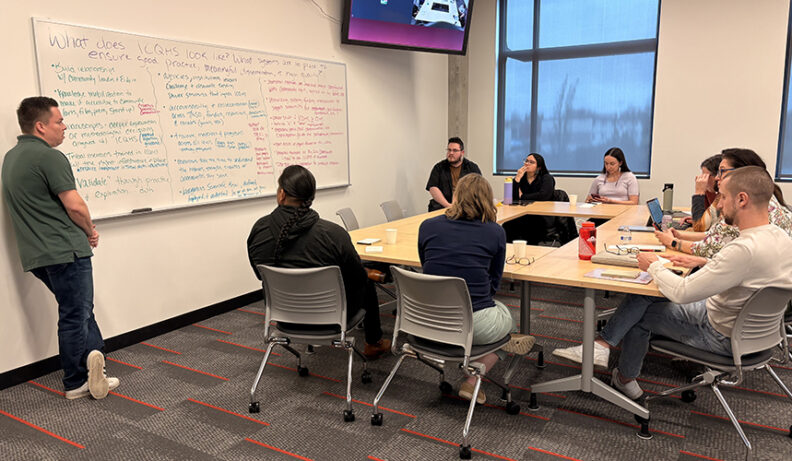
Dr. Cole Allick led a workshop at WSU Everett, a project that brought together Indigenous scholars and allies to craft a working definition of Indigenous-Centered Quantitative Methodologies. The Indigenous-Centered Quantitative Analysis Toolkit for Equity (ICQuATE) project is funded through the Robert Wood Johnson Foundation in which Dr. Allick and IREACH Colleague Dr. Jessica Williams-Nguyen serve as Co-PIs.
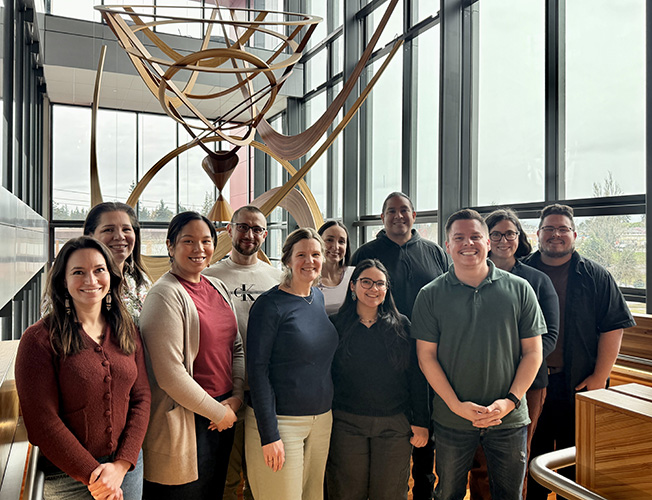
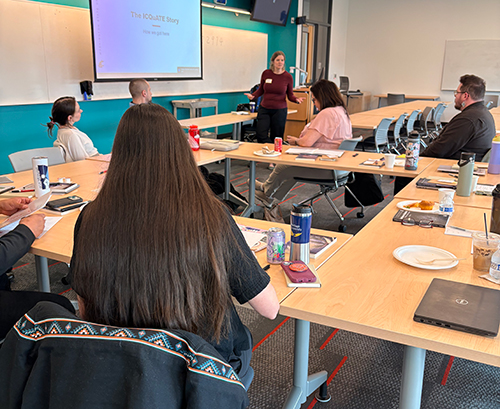
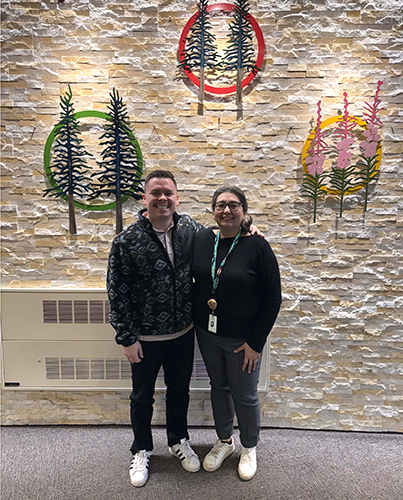
Dr. Cole Allick visited the Southcentral Foundation (SCF) and Alaska Native Tribal Health Consortium in Anchorage, Alaska. While there, Dr. Allick met with Dr. Vanessa Hiratsuka, Senior Researcher at SCF, to discuss opportunities for collaboration and partnership.
Alongside colleagues from IREACH, Dr. Cole Allick presented at the 2026 Health Equity Conference, delivering an overview of Community Engaged Research (CER). The group offered applied examples of how IREACH conducts CER and explained the positive impacts of collaborating with Tribal communities. Learn more about IREACH at WSU.
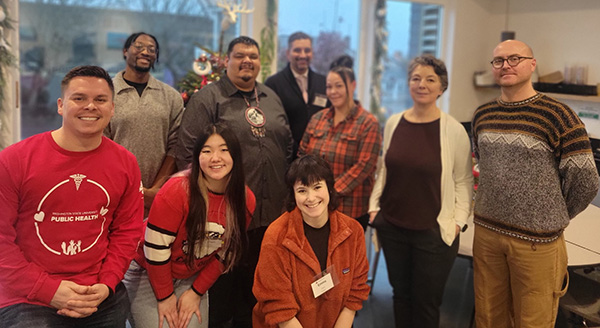
National Public Health Week
During National Public Health Week, April 6 – 10, WSU and Gonzaga University hosted a series of round-table discussions and presentations led by key voices in public health, highlighting research, practice, and policy.
- Monday, April 6 – Catalyzing Social Justice Through Public Health Research and Leadership
- Wednesday, April 8 – Ready? Set? Action! A Roundtable on the Present and Future of Public Health, Policy, and Funding
- Friday, April 10 – Five-Slide-Friday: Research Revealed
Student Success
McNair Scholar and public health major, Sasha Green, received an Auvil Scholar Fellowship for 2026-27 from the Office of Undergraduate Research in the Division of
Academic Engagement and Student Achievement based on the strength of her work. Dr. Kim McBride is Sasha’s research mentor. Sasha presented her research proposal at the 27th Annual University of Maryland National McNair Scholars and Undergraduate Research Conference.
Public health major, Leah Grier, received an Auvil Scholars Fellowship for the 2026-2027 academic year from the Office of Undergraduate Research in the Division of Academic Engagement and Student Achievement. Dr. Cole Allick is the faculty mentor on Leah’s project, which, in partnership with the Disability Action Center Northwest, focuses on emergency preparedness.
As part of PH 402, Public Health Interventions, public health majors Sofie Angulo and Sasha Green will present two posters, Increasing access to behavioral health by reducing stigma through a normalization intervention, and Expanding access to mental health care in rural Washington through task sharing and workforce development, at the WSU College of Medicine Student and Resident Research Day, April 24. Faculty advisors are Dr. Eka Burduli, Dr. John Roll, and Dr. Paul Whitney.
Public health major, Lucy Jones, under the mentorship of Dr. Andreas Eleftheriou, received an undergraduate research award to investigate how national regulations over second-generation anticoagulant rodenticides influenced secondary poisoning in birds of prey across the continental US and Canada.
Second-year veterinary student, Caroline Cave, under the mentorship of Dr. Andreas Eleftheriou, was awarded a summer research fellowship to assess Washington county vulnerabilities to invasion by the Longhorned tick, a species of medical and veterinary significance.