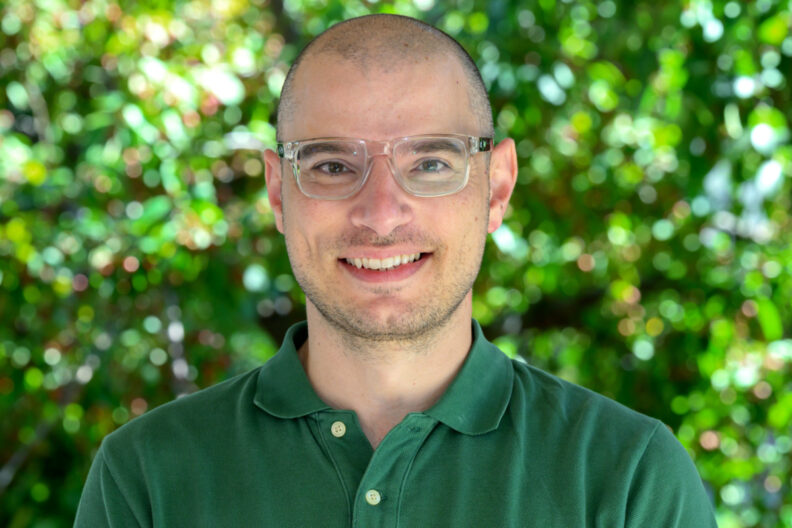
With what some might call a nontraditional path, Dr. Andreas Eleftheriou brings a diverse background in clinical practice, research, and public health to the College of Veterinary Medicine. After starting as a small animal clinician, Eleftheriou pursued a PhD in infectious disease ecology before completing a residency in veterinary public health. Prior to joining WSU, Eleftheriou led research projects focused on the ecology, epidemiology, and human dimensions of pathogens and toxicants at the human–animal–environment interface. That experience now shapes his research program at WSU, where he integrates clinical training with health research to address complex challenges.
What drew you to WSU’s College of Veterinary Medicine?
The new undergraduate public health program was an exciting opportunity to apply my expertise in veterinary public health and One Health more broadly where I could share my passion about the field with students while I helped to grow and strengthen the program. I also wanted to be at a land-grant institution where I could mentor students in research, train veterinary students in veterinary public health and preventive medicine, and conduct research and outreach projects that would benefit Washington residents, animals, and their shared environments. A huge draw was also how nice and welcoming everyone was during my interview. So really WSU’s College of Veterinary Medicine checked all the boxes!
What is your area of expertise?
I am a veterinary scientist board-certified in veterinary preventive medicine with expertise in ecology, epidemiology, and human dimensions of pathogens and toxicants that carry veterinary and medical significance. I’ve mostly investigated rodent- and tick-borne infectious disease systems and heavy metals, such as lead and mercury, and I’m eager to expand to other related systems of concern.
What drew you into this area?
I was first introduced to applied research in ecology and epidemiology when I investigated antimicrobial resistance in enteric bacteria from seagulls off the shore of Maine. Thinking about how antimicrobials used in human and veterinary medicine could promote evolution of antimicrobial resistance in wildlife species was fascinating and motivated me down this career path.
What about your research work are you most excited for?
Right now, I’m most excited about my past and current work centered on the ecology of the invasive Asian longhorned tick in the U.S. and understanding tick-associated pathogen epidemiology. Because it’s an emerging problem, there are a lot of unknowns, and I believe my research has helped to generate knowledge that helps to inform mitigation approaches to protect and promote public and animal health.
What’s something most people don’t know about you?
In my free time, I enjoy song writing, singing, playing acoustic guitar, and drawing/painting.