
Executive summary
In 2008, cases of limping elk exhibiting characteristic hoof lesions reported to the Washington Department of Fish and Wildlife (WDFW) increased markedly in southwestern Washington. By 2017, and in response to stakeholder concern regarding the intensity and spread of the disease, the Washington state legislature unanimously passed Senate Bill 5474 to designate Washington State University’s College of Veterinary Medicine (WSU, CVM) as the state lead in developing a program to monitor and assess causes of and potential solutions for elk hoof disease. Funding of $1,170,000 was provided to WSU CVM for the FY2024-2025 and FY2026-2027 biennia.
The WSU College of Veterinary Medicine team dedicated to addressing elk hoof disease in 2025 included one faculty member on a 60% appointment, one post-doctoral fellow (4 months), three PhD students, one master’s student, and one scientific assistant. Additional WSU faculty, staff, and students and non-WSU collaborators also made significant contributions. WSU conducted two searches to replace the faculty lead for elk hoof disease research; the second is still in progress. Research by our team resulted in publication of four scientific articles that significantly contributed to the current limited published scientific literature on elk hoof disease.
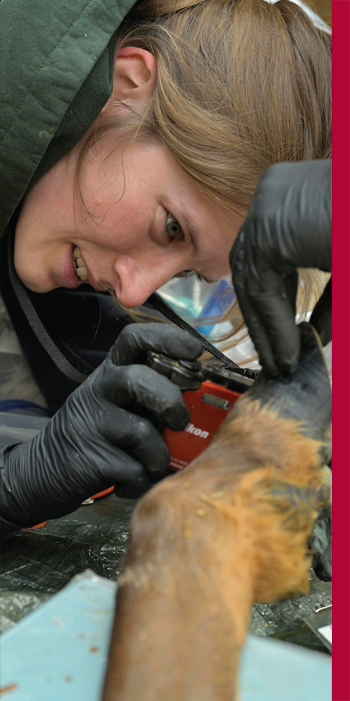
Over the last seven years, we have conducted significant research to complete objectives outlined in the Research Plan: Phase One (See Addendum). These contributions provide foundational knowledge on TAHD and address the four principal areas of the Research Plan, as well as ancillary areas of inquiry. Specific to 2025, we conducted the following tasks:
- Study the disease cause(s) and contributing factors in captive elk. We conducted data analyses and drafted a manuscript reporting findings of a study that developed a reliable transmission model for treponeme-associated hoof disease (TAHD) in captive elk (Drankhan PhD project). Our modified experimental approach, which included use of enriched bacterial cultures in addition to minced TAHD lesion material, successfully reproduced TAHD quickly and used far fewer inoculations than our previously reported model suggesting it could be used in future studies to investigate host risk factors and immune response and potential inter-species transmission of TAHD. A manuscript reporting the results is in review.
- Study disease agents in the laboratory. We used state of the art technology (16S amplicon sequencing) to sequence a specific portion of DNA from bacteria in hoof samples to investigate bacteria associated with a spectrum of microscopic hoof lesions to help elucidate the cause and manner of disease development of TAHD (Goldsmith PhD project). We detected bacteria previously associated with TAHD (e.g., Treponema and Treponema-like bacteria) as well as Mycoplasma, Fusobacterium, and some additional bacteria of interest providing further evidence that TAHD is a polybacterial disease. The manuscript was published in the journal Applied and Environmental Microbiology (doi. org/10.1128/aem.00888-25). Read the full journal at American Society for Microbiology.
We conducted even more in-depth investigation of bacteria using shotgun sequencing that provides DNA sequences from throughout the bacterial genome (Deb post-doc project). We found that the novel treponemes we previously discovered in TAHD-positive hooves were not present in TAHD-negative samples, suggesting they are important in the development of TAHD. Additionally, shotgun sequencing was used to develop molecular probes that microscopically label presumptive pathogens within TAHD lesions (Goldsmith PhD project). These findings suggest that Treponema and Mycoplasma were most closely localized with lesions, indicating their importance in disease development. This information can be used in the future to develop more sensitive diagnostic tests. Manuscripts reporting these findings are in preparation. - Conduct regional surveillance and investigate risk factors. TAHD has been confirmed in elk in Washington, Oregon, Idaho, and California. We continued working with state and tribal wildlife managers to collect hooves in Washington and other western states for disease surveillance. TAHD was confirmed in two new game management units (GMUs) in Washington, but not in any new states or in species other than elk.
We investigated risk factors associated with TAHD using two approaches (Winter PhD project). First, we examined how reports of hoof abnormalities were associated with local land cover, topography, soil characteristics, and precipitation in southwestern Washington. TAHD cases were higher in areas with clay soil and agricultural land. TAHD was not associated with precipitation, but the area studied received high annual precipitation (> 140 cm). These findings can be used to focus surveillance and management actions in high-risk areas. Published findings in the journal Ecosphere (doi.org/10.1002/ecs2.70470). We also investigated TAHD risk associated with mineral status of elk in California. While elk with TAHD did not have significantly lower levels of copper or selenium than elk without TAHD, the minerals in both groups of elk were below previously reported reference ranges, so we cannot rule out low mineral levels as a potential risk factor for TAHD. The findings were published in the Journal of Wildlife Diseases (doi.org/10.7589/JWD-D-24-00135). - Understand social aspects of the disease and communicate findings. We conducted outreach by distributing information via a newsletter (ELKTracks), website, the media, in-person meetings with state and tribal wildlife agencies, and scientific conferences. We reached a national audience by being featured in an episode of the Vortex Nation podcast on YouTube. We published a scientific article that reports findings from our 2020 survey of public perceptions of elk hoof disease by the general public and hunters in Washington in the journal Human Dimensions of Wildlife (doi/full/10.1080/10871209.2025.2515919). Read at Taylor & Francis Online.
- Ancillary projects. We completed a study that evaluated the use of activity monitors to remotely detect behavioral changes associated with TAHD in captive elk (Hill MS project). The manuscript will be published in early 2026 in the journal Animals. We also initiated a collaborative project with the Stillaguamish Tribe and Texas Tech University to develop a PCR test that would allow us to screen samples for TAHDassociated pathogens.
Background and overview
Hoof disease, known scientifically as Treponeme-associated hoof disease (TAHD), is an emerging disease of elk in the northwestern U.S. Prior to 2008, only sporadic cases of limping elk with hoof deformities had been reported to the Washington Department of Fish and Wildlife (WDFW). In 2008, those reports increased substantially, particularly in southwestern Washington. The disease has now been identified in elk herds across much of western Washington, as well as sporadic locations east of the Cascades. Additionally, cases have been diagnosed in Oregon, Idaho, and California.
Elk with hoof disease have characteristic ulcers on their feet with associated overgrown, broken, or sloughed hooves. Affected elk are debilitated and, according to preliminary research by WDFW, experience higher mortality which may lead to population level impacts. This disease has the potential to devastate Washington’s elk populations and because of the interaction of wild elk with domestic livestock, it is also of concern to other Washington stakeholders including the livestock industry.
In response to intense stakeholder concern, in 2017 the Washington state legislature unanimously passed Senate Bill 5474 to designate Washington State University’s College of Veterinary Medicine (WSU, CVM) as the state lead in developing a program to monitor and assess causes of, and potential solutions for, elk hoof disease. A biennial budget was allocated to WSU CVM to address this effort beginning on July 1, 2017. At that time no elk hoof disease program existed at WSU, and a new program was literally created from the ground up, including the construction of an elk research facility. The legislature continued biennial funding at a level of $1,170,000 for the FY2024-2025 and FY2026-2027 bienni.
The following report consists of two sections. The first section, Research and Outreach Accomplishments in 2025, summarizes accomplishments made implementing our research plan in 2025 and presents next steps for research in the coming year. The second section is our Research Plan: Phase One, which is attached as an Addendum at the end of this report for reference. The Research Plan was developed in 2018 and defines the research approach that guided our work for the period 2019-2024, and that was extended to 2025.
Over the last seven years, we successfully completed objectives that were outlined in the Research Plan: Phase One (See Addendum). Important foundational knowledge has been gained through this research, including publication of eleven articles in peer-reviewed journals with six more articles in preparation or in review for publication in the coming months. Research findings have been openly shared to enhance stakeholder understanding of the disease and to inform management actions. Further, these findings can be used to build upon in the next phase of TAHD research and outreach.
Research and outreach accomplishments in 2025
General
Student training
Students contribute to research while gaining education. Students that contributed to research described in this report include:

Elizabeth Goldsmith, DVM, completed her PhD and successfully defended her dissertation in November 2025. Dr. Goldsmith’s research focused on pathogen discovery using metagenomic techniques.
Her work also provided DNA sequences of pathogens that are being used to develop new diagnostic tests for TAHD. The first paper from her PhD was published in the journal Applied and Environmental Microbiology and a second paper is in preparation. She graduated in December 2025.
Her work also provided DNA sequences of pathogens that are being used to develop new diagnostic tests for TAHD. The first paper from her PhD was published in the journal Applied and Environmental Microbiology and a second paper is in preparation. She graduated in December 2025.

Steven Winter, MS, completed his PhD and successfully defended his dissertation in February 2025. Dr. Winter studied spatial and temporal distribution and risk factors of TAHD using computer modeling.
The third scientific manuscript from Dr. Winter’s PhD work, which examined associations between TAHD and liver mineral levels, was published in the Journal of Wildlife Diseases. His fourth and final paper from his PhD investigated risk factors for TAHD occurrence in southwestern Washington and was published in the journal Ecosphere. Dr. Winter was the recipient of the Wildlife Disease Association’s 2025 Graduate Student Research Recognition Award. As the award recipient, he gave an invited plenary presentation at the annual Wildlife Disease Association Conference. He also presented findings from his work at the Biennial Deer and Elk Workshop. Dr. Winter graduated in May 2025.

Trent Hill completed his MS Project and successfully defended his thesis in July 2025.
Trent evaluated behavioral changes associated with TAHD infection in captive elk using telemetry data collected from newly developed ankle monitors. He presented results from his project at the Biennial Deer and Elk Workshop. A paper reporting his findings is in review with the journal Animals. Trent graduated in August 2025.

Holly Drankhan, DVM, is in the final year of a combined pathology residency/PhD program and is developing a reliable TAHD transmission model using elk at the captive research facility.
Dr. Drankhan submitted a manuscript reporting findings from her study that is currently in review with the journal Microbiology Spectrum. She also presented her findings at the annual Wildlife Disease Association Conference. Additionally, Dr. Drankhan conducted an evaluation of different methods to sample hooves from free-ranging elk. Data analysis and manuscript preparation for that study is in progress. Dr. Drankhan is the recipient of an NIH T32 training grant (grant number T32AI007025) that funds her stipend. Anticipated graduation is in Spring 2026.

Post-doctoral fellow. Sushanta Deb, PhD, completed his post-doctoral appointment in April 2025.
Dr. Deb brought extensive experience with computer analysis of complex genetic codes (a field called bioinformatics) to discover and describe bacteria associated with TAHD. His work led to discovery of new Treponema and Treponema-like bacteria.
Staffing
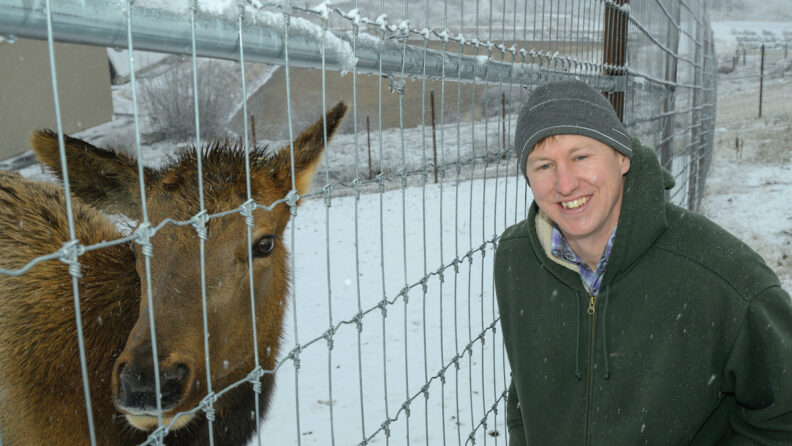
A scientific assistant, Charlie Park, manages the laboratory, oversees diagnostic case submissions and processing, and coordinates research animal care.
Veterinary and undergraduate students assist with laboratory tasks and animal care.
Study the disease cause(s) and contributing factors in captive elk
- Captive elk facility. We maintained the elk research facility, which was constructed in 2020. Research to develop a reliable TAHD transmission model was completed at the facility in fall of 2024. Following that study, the five remaining elk were maintained pending further plans that will be developed when a new faculty elk hoof disease program lead is hired.
- Animal care and biosafety. Coordination with the WSU Environmental Health and Safety office and animal care oversight programs contributed to ensuring compliance with applicable standards as well as state and federal regulations. Protocols for holding and conducting research on captive elk were maintained and approved by the WSU Institutional Animal Care and Use Committee (IACUC), a federally mandated oversight group.
- Develop a reliable transmission model in captive elk. We analyzed data and drafted a manuscript to report findings of a study that developed a reliable TAHD transmission model in captive elk (Drankhan PhD project). Treponema, and some other TAHD-associated bacteria, do not grow well under standard laboratory conditions; however, we were able to enhance their growth along with some other bacteria. These enriched bacterial cultures were used in addition to minced lesion material from wild elk that had died from TAHD to create inocula that were applied to the feet of captive elk under experimental conditions. All five experimentally challenged elk developed TAHD lesions within 28 days. Two control elk that were treated identically, but without the bacterial culture and with hooves from healthy wild elk, did not develop TAHD lesions. This experimental approach successfully reproduced TAHD quickly and used far fewer inoculations than our previously reported model (Robinson et al. 2023) suggesting it could be used in future studies to investigate host risk factors and immune response and potential inter-species transmission of TAHD.
Study disease agents in the laboratory
Bacteria associated with microscopic lesion categories. The objective of this work was to investigate bacteria associated with a spectrum of microscopic hoof lesions to elucidate the cause and manner of disease development of TAHD (Goldsmith PhD project). Findings support the presence of Treponema and Treponema-like bacteria, as well as Mycoplasma and Fusobacterium. Additionally, one type of Corynebacterium may be important in early lesions. These bacteria were found in samples collected across the geographic range of TAHD, with minor variations, whether elk were from areas with high or low prevalence of TAHD. Together, these findings provide further evidence that while Treponema are important, TAHD is a polybacterial disease. The manuscript was published in the journal Applied and Environmental Microbiology (doi.org/10.1128/aem.00888-25).
Bacterial community analysis of treponeme-associated hoof disease in free-ranging elk (Cervus canadensis): evidence for a polybacterial etiology with geographic consistency
E. W. Goldsmith, K. R. Taylor, M. A. Wild, S. Deb, T. Sullivan, E. Lofgren, K. Garrison, G. M. Schroeder, C. Hilson, N. L. Walrath, J. D. Burco, E. Lantz, S. N. Winter, and D. H. Shah
Abstract: Treponeme-associated hoof disease (TAHD) is an emerging infectious disease in free-ranging elk (Cervus canadensis) characterized by ulcerative and necrosuppurative pododermatitis with spirochete bacteria that leads to lameness and apparent increased mortality. While TAHD is hypothesized to have a polybacterial etiology, the causative agents remain poorly characterized, particularly across its geographic range. In this study, we developed a histologic categorization system for hoof lesions and employed 16S rRNA gene amplicon sequencing to characterize bacterial communities in samples from 129 free-ranging elk across regions with endemic or sporadic TAHD and where TAHD remains undetected. Differential abundance analysis revealed strong associations between TAHD-positive lesions and the bacterial genera Treponema, unidentified Spirochaetaceae, Mycoplasma, and Fusobacterium, along with their respective families and amplicon sequence variants. Many of these TAHD-associated operational taxonomic units (OTUs) were also more frequently detected at increased abundance in more severe, histologic lesions of pododermatitis. Correlation analysis demonstrated a strong positive association between Treponema and Mycoplasma in TAHD lesions, suggesting a more significant role of Mycoplasma in TAHD’s etiology than previously recognized. Additionally, we identified novel TAHD-associated OTUs, including Corynebacterium freneyi-xerosis, that warrant further investigation. Comparative analysis of TAHD-positive lesions from endemic and sporadic areas revealed minimal differences in the microbial community. These findings advance our understanding of the bacterial contributors to TAHD, highlighting putative pathogens for further investigation and as potential targets for diagnostic development.
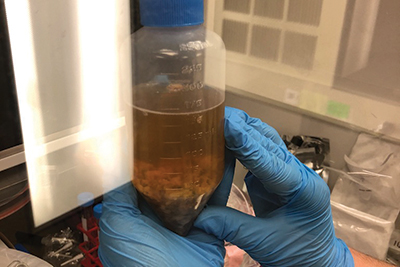
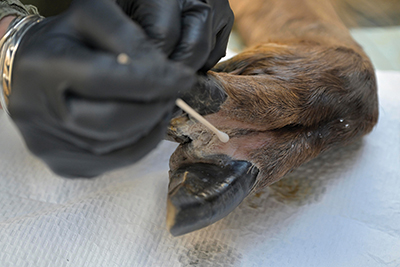
Pathogen discovery using genome reconstruction. In previous work, we used data from a technique called shotgun sequencing to assemble and reconstruct genomes of previously uncharacterized bacteria to discover new Treponema-like bacteria in TAHD-positive hooves (Deb post-doctoral study, and in collaboration with Dr. Devendra Shah, Texas Tech University). This technique allows us to use bacterial DNA to identify bacteria that are very challenging, if not currently impossible, to grow in the laboratory. Currently, we are investigating whether these Treponema-like bacteria are present in a larger sample of TAHD-positive hooves from areas of high and low TAHD prevalence and in TAHD-negative hooves. Preliminary results suggest that these Treponema-like bacteria are consistently detected in all TAHD-lesions but not detected in hooves from areas where TAHD does not occur. Additionally, these bacteria may be carried or occur in very early lesions even before TAHD can be diagnosed using current approaches. A manuscript reporting findings is in preparation for submission to a scientific journal.
Association of suspected pathogens with histologic lesions. We also used shotgun sequence data to identify unique DNA sequences and develop probes for four potentially important pathogens we previously identified (see previous section on “Bacteria associated with microscopic lesion categories”; Goldsmith PhD project). When samples of TAHD lesions are examined under the microscope, a color change is observed where the probe finds the DNA sequence of the specific pathogen of interest using a test called an in situ hybridization (ISH) assay. This test allows a veterinary pathologist to determine if the specific pathogen is present, and if so, how it is (or is not) associated with a microscopic TAHD lesion. The results can also contribute to development of an improved diagnostic test for TAHD. We found that Treponema and Mycoplasma were routinely localized in TAHD lesions, suggesting they are most important in lesion development, and will be good target probes to investigate for a diagnostic test. A manuscript is in preparation for submission to a scientific journal.
Compare hoof sampling techniques. We analyzed hoof samples collected using different methods (punch biopsy, skin scraping, and skin swab) to compare detection of TAHD-associated pathogens from each sample type using 16S amplicon sequencing. The objective of the study (Drankhan PhD project) is to determine if less invasive techniques (swabbing or scraping) are as reliable as a biopsy in characterizing the bacterial community present in TAHD lesions. We developed a technique to maximize DNA yield from swabs due to the low biomass of that sample type. Data are being analyzed and a draft manuscript is in preparation for submission to a scientific journal.
Conduct regional surveillance and investigate risk factors
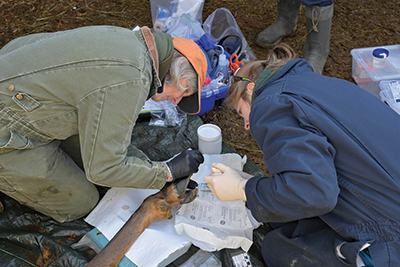
Diagnostic testing. Led by Washington Animal Disease Diagnostic Laboratory (WADDL) pathologist and faculty member Dr. Kyle Taylor and with support from graduate students and scientific assistant Charlie Park, we evaluated hooves from Washington and surrounding states. We previously reported findings from surveillance conducted in Washington, Oregon, Idaho, and California in 2018-2020 (Wild et al. 2022). With this baseline distribution documented, in 2025 we focused sample collection primarily on areas, generally at the county or game management unit (GMU) level, where TAHD had not been previously detected, on cases of management concern, and to obtain samples for research purposes. Working with state and tribal wildlife managers, we received hooves for disease surveillance from Washington (1 elk), Oregon (14 elk), and Idaho (2 elk, 1 mule deer). We maintained a national map of locations of TAHD cases in elk. TAHD has not been detected in wildlife species other than elk. See Frequently asked questions about elk hoof disease.
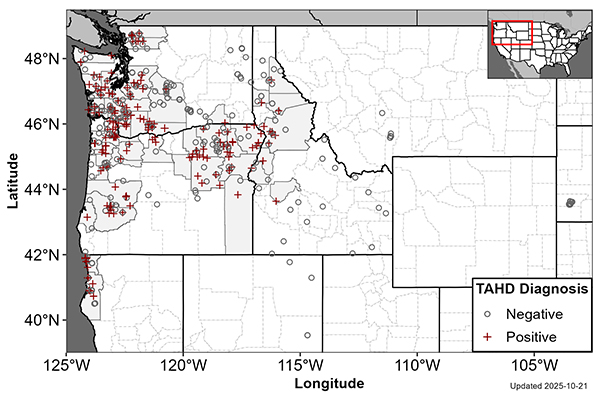
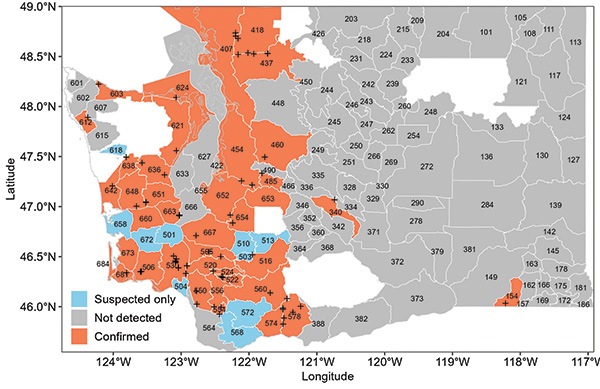
This year we did not detect TAHD in any new states or areas distant to previously known distribution, although TAHD was confirmed in two new GMUs in Washington (460, 684). We continue to solicit submission of abnormal hooves from several Washington GMUs (448, 490, 501, 503, 504, 510, 513, 568, 572, 618, 658, 672) in an attempt to confirm TAHD where it is suspected to occur but has not been diagnosed using laboratory techniques.
Mineral status of elk. We completed an investigation into the correlation of mineral levels in liver with the occurrence of TAHD (Winter PhD project). We did not find support for our hypothesis that lower mineral levels contributed to higher TAHD occurrence in the populations sampled; however, copper and selenium in both TAHD-affected and unaffected elk were below previously reported reference ranges, so we cannot rule out suboptimal levels of these minerals as potential risk factors for TAHD. Nevertheless, given our current understanding, we do not recommend mineral supplementation due to the risk of congregation of elk promoting disease transmission. Findings were published in the Journal of Wildlife Diseases (doi.org/10.7589/JWD-D-24-00135).
Liver Mineral Levels Associated with Hoof Disease Occurrence and Severity in Roosevelt Elk (Cervus canadensis) in California, USA
Steven N. Winter, Margaret A. Wild, Emma L. Lantz, Carrington Hilson, Katherine D. Watson, Jessica M. Yamauchi, and Kathryn P. Huyvaert
Abstract: Trace minerals serve vital roles in physiologic functions of animals. In ungulates, trace minerals, including copper (Cu), selenium (Se), and zinc (Zn), are essential for immune function, as well as hoof development and maintenance. Trace minerals may influence the occurrence or severity of treponeme-associated hoof disease (TAHD), a debilitating infectious disease of free-ranging Roosevelt and Rocky Mountain ecotypes of elk (Cervus canadensis). To investigate associations between mineral levels and TAHD, we collected postmortem liver and hoof samples from freeranging Roosevelt elk during TAHD surveillance from 2020 to 2021 in Del Norte and Humboldt counties, California, USA. We analyzed mineral levels in liver samples (n=81; 41 TAHD positive, 40 TAHD negative) to improve baseline information on the range of trace mineral concentrations for elk in the region. Hooves were examined for the presence of TAHD, and the severity of observed gross lesions was scored. Using the combined mineral and surveillance data, we constructed logistic and ordinal regression models to ask whether TAHD occurrence and TAHD lesion severity were associated with mineral concentrations, respectively. We did not find support for our hypothesis that lower mineral levels contributed to higher TAHD occurrence in the sample populations; however, Cu and Se in both TAHD-affected and unaffected elk were below previously reported reference ranges, so we cannot discount suboptimal levels of these minerals as potential risk factors for TAHD in elk in this region. Contrary to our hypothesis, higher Zn levels were correlated with TAHD occurrence and increasing lesion severity, which may be evidence of a host-mediated nutritional immune response to infectious disease. Further investigation is needed to understand regional variation in mineral levels and the impact on wildlife health before mineral supplementation can be recommended as an effective management tool.
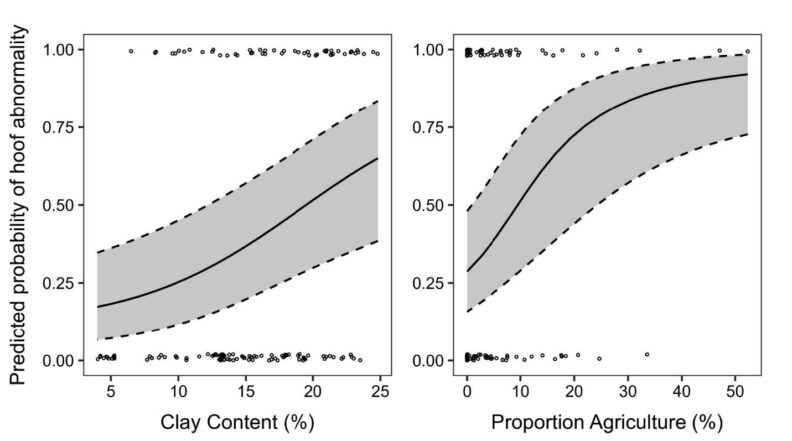
Risk factors for TAHD occurrence. We completed an investigation into the role of environmental features in the occurrence of TAHD (Winter PhD project). Sufficient data were available from elk only in an endemic area of the disease in southwestern Washington. We evaluated how hoof abnormalities were associated with local land cover, topography, soil characteristics, and precipitation. TAHD cases were higher in areas with clay soil and agricultural land. The odds of TAHD occurrence increased by 14% and 12% with each percentage increase in clay content and agricultural land, respectively. TAHD occurrence was not associated with precipitation, but the area studied received high annual precipitation (> 140 cm). These findings can be used to focus surveillance and management actions in high-risk areas. Findings were published in the journal Ecosphere (doi 10.1002/ecs2.70470).
Land use and soil characteristics are associated with increased risk of treponeme-associated hoof disease in elk
S. N. Winter, G. A. Sargeant, M. A. Wild, E. Clancey, K. P. Huyvaert, K. Garrison, and P. Fernandez.
Abstract: Environments can shape the occurrence and extent of disease outbreaks in wildlife. We studied the effects of environmental features on the occurrence of treponeme-associated hoof disease (TAHD), an emerging infectious disease of free-ranging elk (Cervus canadensis), in southwestern Washington, USA. During the 2016-2022 harvest seasons, successful elk hunters returned mandatory harvest reports and noted the presence or absence of hoof abnormalities indicative of TAHD. We used generalized linear models and an information-theoretic approach to model selection to relate (1) the spatial distribution of hoof abnormalities to features of landscapes (land cover, topography, and soil characteristics) and (2) the temporal distribution of hoof abnormalities to precipitation during the year preceding the harvest season. The probability of hoof disease increased with soil clay content and proportion of agricultural land (88% of model weight). We found no conclusive evidence for an effect of precipitation on the occurrence of TAHD, but this could relate to relatively high annual precipitation (>140 cm) in the study area. Nevertheless, disease cases may have been negatively associated with precipitation during February–June (55% of model weight). Soils and land management practices may increase the risk of hoof disease by promoting the survival of pathogens that cause TAHD, the susceptibility of elk to infection, or the intensity of pathogen transmission among elk when congregated. Focusing on areas where the risk of disease is greatest may facilitate the detection of TAHD during surveillance. Likewise, removing infected elk and dispersing uninfected elk from areas with the greatest risk of disease may enhance the effectiveness of efforts to reduce trans-mission. Basing this work on the knowledge that disease risk is modified by factors of hosts, pathogens, and environments, this study serves as an application of the epidemiological triad framework to better understand the ecology and epidemiology of an emerging infectious disease in wildlife.
Understand social aspects of the disease and communicate findings
Social science inquiry. We completed a study with the WSU Social and Economic Sciences Research Center (SESRC) that reports findings from the 2020 survey of public perceptions of elk hoof disease by the general public and hunters in Washington. Trust in the wildlife management agency and level of concern about the impact of disease were strong indicators of the likelihood of support for management actions. Overall, in situations where lethal removal is proposed as a method to manage TAHD, members of the general public were more likely to support lethal removal of elk by the wildlife management agency, while hunters preferred removal through hunter harvest. Our findings also revealed the importance of proactive communication with regard to the need for early intervention to effectively manage disease. Respondents in this study indicated limited support for lethal removal when only a small number of elk are infected; however, early in a disease outbreak is the time that lethal removal is most biologically likely to have a positive outcome.
Therefore, proactive communication may be useful to promote support for early intervention when few animals are infected and the number of elk that would need to be lethally removed is likely lower. The manuscript was published in the journal Human Dimensions of Wildlife (doi 10.1080/10871209.2025.2515919). Read at Taylor and Francis online.
Impacts of normative beliefs and trust in agency on likelihood of support for elk hoof disease management actions in Washington State
Lena Le, Margaret A. Wild, and James McCall
Abstract: Elk hoof disease is an emerging disease in the northwestern United States. Managing wildlife disease is a difficult task, particularly when information on cause and transmission is limited. We examined the relationships among wildlife normative belief dimensions and level of trust in the wildlife management agency with support for hoof disease management actions in elk (Cervus canadensis). The study was conducted in 2020 with two sampling frames of Washington State residents: random Address-Based Sample of general population (ABS) and licensed elk hunters. For the ABS, a mail-push-to-web followed by a paper questionnaire survey method was applied, while an e-mail contact to web survey was employed for the hunters. Perceived values, perceived risks, and trust in the wildlife management agency were indicators of support for management options. Results illustrated two main implications: proactive communication with stakeholders is important in the management process, and collaboration may be useful to increase trust.
Communicate through a Listserv. Respondents to the SESRC survey expressed strong support for learning of progress on hoof disease via a listserv. Individuals who were signed-up for our listserv received a newsletter called “ELKTracks” with research updates and other information on our research activities in. The listserv reaches nearly 200 recipients and continues to grow. See all ELKTracks newsletters.
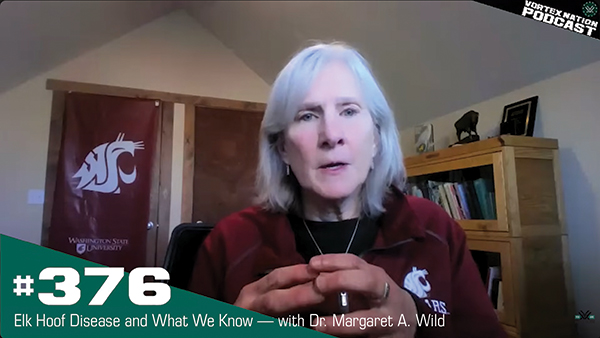
Media coverage and outreach. Our research on hoof disease received coverage in local and national media. Of particular note, elk hoof disease and our research were featured on Episode 376 of the Vortex Nation Podcast, which is available on YouTube. On the local level, our research was featured in a story in The Columbian.
Informal correspondence also continued, with timely responses to inquiries from stakeholders, legislators, and the media. Presentations were also give in a WSU veterinary course and a CANUSA Student Chapter of the Wildlife Disease Association seminar.
Website. The elk hoof disease website was maintained to provide information on elk hoof disease and our research.
Scientific outreach. We presented scientific findings from WSU’s research program at scientific conferences, including the Wildlife Disease Association and the Biennial Deer and Elk Workshop. An invited seminar was also presented to the Texas Tech University School of Veterinary Medicine.
Collaborate with WDFW and tribes
- Collaborative disease surveillance. We collaborated with wildlife managers in Washington, Idaho, Oregon, California, and the Northwest Indian Fisheries Commission (NWIFC) to obtain hooves from elk harvested or found recently deceased in locations of interest for disease surveillance and/or for collection of research samples. Expertise at WSU assists collaborators in detecting the disease. Findings from all locations help inform our understanding of the disease in Washington and are critical for our research.
- Collaboration with WDFW. In addition to regular communications, we conducted quarterly virtual meetings to share information and plan and coordinate work. Additionally, WDFW staff were invited to attend candidate seminars and some met with finalists for the elk hoof disease faculty search. We also completed a data transfer and use agreement between WSU and WDFW so that a set of WSU TAHD surveillance data from Washington can be maintained and managed on a WDFW data management site as requested by WDFW.
- Tribal collaboration. In addition to coordination with several tribes for submission of hooves for disease surveillance and research, a NWIFC biologist joined quarterly virtual meetings between WSU and WDFW. Tribal wildlife staff were also invited to attend candidate seminars and some met with finalists for the elk hoof disease faculty search. We also facilitated a new cooperative research project between the Stillaguamish Tribe, Texas Tech University, and WSU to develop a PCR test to detect TAHD-associated pathogens.
Ancillary projects
During the course of any planned research, unexpected new and important questions often arise. Addressing these questions must be prioritized to avoid overextending resources, but in some cases opportunistic projects that can be supported are added to the research program.
- Activity monitors. We completed evaluation of leg-mounted activity monitors developed in collaboration with Advanced Telemetry Systems (ATS) to investigate changes in behavior associated with TAHD in captive research elk (Hill MS project). We found that the monitors provided reliable data with 85% overall accuracy of the continuous onboard classification of activity as standing, moving, or bedded. Following TAHD challenge (see previous section on “Develop a reliable transmission model in captive elk”), monitor-derived data were able to detect that treatment elk (those exposed to TAHD) that exhibited abnormal locomotion spent more time bedded and less time moving or standing. Treatment elk spent roughly 10% more of the day bedded than control elk. These findings suggest that the monitors can detect changes in elk activity and may serve as a useful tool for future wildlife disease monitoring efforts. A manuscript reporting findings is in the final stages of review with the journal Animals.
- Evaluation of bison hooves. The susceptibility of bison to TAHD or a similar disease of cattle (called bovine digital dermatitis) is not known. However, because wild and captive-raised bison overlap range with elk in some areas and given the phylogenetic similarity of bison and cattle, bison may be a species at risk of developing digital dermatitis similar to that in elk or cattle. We sampled hooves from bison to obtain baseline information on the presence or absence of foot lesions and bacteria associated with digital dermatitis in cattle and elk. 16S sequencing to identify bacteria present has been conducted and microscopic examination (histopathology) is pending.
- PCR development. We initiated a collaborative project to develop a PCR test that would allow us to screen samples for TAHD-associated pathogens. WSU facilitated the project and will provide archived DNA from hoof samples of known TAHD status to validate the test. The Stillaguamish Tribe provided funding to Texas Tech University to develop the PCR and with guidance from WSU will collect hooves for testing. A PCR test specific for TAHD-associated pathogens will allow testing of samples collected from live elk as well as screening of hooves collected postmortem.
Next steps
Since the passage of Senate Bill 5474, active disease surveillance conducted collaboratively between WSU and state, tribal, and federal wildlife agencies resulted in diagnosis of the disease over a broader geographic area than was previously described. Unfortunately, the disease has expanded from a primarily local concern in southwestern Washington to a statewide issue. Moreover, with continuing cases in Washington, Oregon, Idaho, and California, it has emerged as a multi-state regional issue. The broader geographic range amplifies the need for continued research on this important emerging disease. Our research will continue to reflect this broader scope, while focusing on the application of findings to Washington.
General
- Research Team. We will maintain staff and students to implement required components of the Research Plan (see Addendum) while a WSU CVM job search for a new faculty member to lead the elk hoof disease research program is conducted. The objective is to complete a hire as soon as possible with a position transition by mid-2026 when Dr. Margaret Wild will retire. The final graduate student on the current team is expected to graduate in May 2026.
- Research Plan. An updated Research Plan for the next 3- to 5-year period will be developed when a new WSU faculty lead for elk hoof disease research is hired. Until then, ongoing projects under the Research Plan for 2019-2024 (See Addendum) will be completed.
- Legislative reporting. The next report covering the period January-December 2026 will be submitted by February 5, 2027. Legislators and their staff are welcome to contact Dr. Margaret Wild at any time to ask questions or receive additional information as it is developed.
Study the disease cause(s) and contributing factors in captive elk
- Maintain captive elk for study. Five elk that were previously procured will be maintained. Plans for work with captive elk will be addressed in a new Research Plan that will be developed by the new elk hoof disease faculty research leader.
- Develop a reliable transmission model in captive elk. A manuscript reporting findings of a study that developed a reliable TAHD transmission model in captive elk (Drankhan PhD project) is in review with a scientific journal. We anticipate publication in 2026.
Study disease agents in the laboratory
- Pathogen discovery using genome reconstruction. We will finalize analyses and draft a manuscript (Deb post-doctoral project) for submission to a scientific journal. We anticipate publication in 2026.
- Association of putative pathogens with histologic lesions. We will complete a draft manuscript (Goldsmith PhD project) for submission to a scientific journal. We anticipate publication in 2026.
- Compare hoof sampling techniques. We will complete sample analyses to compare results from the three different sample types (Drankhan PhD project). A manuscript will be prepared for submission to a scientific journal. We anticipate publication in 2026.
Conduct regional surveillance and investigate risk factors
- Disease surveillance. Disease surveillance will continue using samples submitted by wildlife agencies. Priority will continue to be on GMUs in Washington where suspect cases of the disease have been observed but diagnostic testing has not confirmed TAHD and in new geographic areas (at the GMU or county level) where TAHD has not been previously diagnosed. We will also collaborate to examine hoof samples from other states to determine the geographic extent and study distributional progression of the disease.
Understand social aspects of the disease
- Outreach. Outreach via the listserv, website, media, legislative briefings, and stakeholder meetings will continue. Additionally, presentations to Washington’s legislators and staff can be arranged. Outreach to introduce the new elk hoof disease faculty research leader and transition the program will occur within a few months of the position’s hire. Communication with the scientific community will occur through publication of
manuscripts that are in preparation and in review.
Collaborate with WDFW and tribes
- Collaborative disease investigation. We will continue collaboration with WDFW, NWIFC, and other wildlife agencies to obtain hooves from elk harvested or found recently deceased in locations of interest for disease surveillance and collection of research samples. Expertise at WSU assists managers in Washington and across the Northwest in detecting the disease. Findings from all locations help inform our understanding of TAHD in Washington and are critical for our research.
- Collaboration with WDFW. In addition to regular communications, we will conduct quarterly meetings. We will also continue to collaborate on procuring elk hooves for disease surveillance and research.
- Native American Tribes. We will continue collaboration with Native American tribes to share information and obtain hoof samples. We will schedule in-person or virtual meetings as requested, including collaborations on development of a PCR test for TAHD-associated pathogens.
Ancillary projects
- Activity monitors. A manuscript reporting findings (Hill MS project) will be published in the journal Animals in 2026.
- Evaluate bison hooves. We will compile results on microscopic changes observed in bison feet to determine what bacteria are present. Based on results, we will determine whether preparation of a manuscript to submit for publication is warranted.
- PCR test development. We will continue collaboration with the Stillaguamish Tribe and Texas Tech University to develop and validate a PCR to test for TAHD-associated pathogens.
- Post-mortem changes associated with TAHD. We will continue collaborations with California Department of Fish and Wildlife and compile results from post-mortem examinations of elk with TAHD conducted in California and at WADDL. We will recruit a student to analyze findings and prepare a manuscript for submission to a scientific journal.
- Report summarizing our knowledge of TAHD. A report will be prepared to summarize research findings and report on the current state of knowledge around TAHD. The report will be shared with stakeholders and partners and may be submitted for publication in a scientific journal.
References
- Robinson, Z. B., D. H. Shah, K. R. Taylor, and M. A. Wild. Transmission and lesion progression of treponeme-associated hoof disease in captive elk (Cervus canadensis). 2023. PLoS ONE 18(8): e0289764.
- Wild, M. A., D. Shah, K. R. Taylor, K. Garrison, K. Mansfield, J. Burco, S. N. Winter, M. L. Drew, S. Han, R. Bildfell, and B. A. Munk. 2022. Surveillance for an emergent hoof disease in elk (Cervus elaphus) in the U.S. Pacific West supplemented by 16S rRNA gene amplicon sequencing. Journal of Wildlife Diseases. 58: 487-499.
Addendum
Research plan – Phase one: 2019-2024
The first step in establishing the research program was to define research goals and identify key research questions. In alignment with Senate Bill 5474, the goal of WSU elk hoof disease research is to identify the cause(s) of the disease and how to successfully manage it in the wild. Achieving this goal will require an incremental multi-pronged biological and social science research approach implemented over multiple years. The first phase of work addresses foundational questions and was initially conducted with a three-year horizon (2019-2021). Program evaluation led to extension and expansion of the plan to incorporate a six-year period (2019-2024). Successive phases of work will build on findings from these initial studies. The four principal areas of inquiry for these studies are:
- Study the disease cause(s) and contributing factors in captive elk. We will use captive elk in a controlled environment to investigate the cause(s) of hoof disease and contributing factors that make elk more or less susceptible.
NEED: The definitive cause(s) of hoof disease are not known and are required for effective management as well as to identify risk to other species. Treponema species are associated with hoof lesions; however, it is unknown whether these bacteria are the primary cause of disease, or secondary invaders. Extensive stakeholder concern exists regarding elk exposure to herbicides, fertilizers, and habitat changes as a cause or contributing factor for disease. Controlled studies are needed to investigate the individual and collective impacts of pathogens and other contributing factors to disease.
APPROACH: Initial work will focus on development of a disease challenge model to determine if the disease 1) is infectious and contagious and 2) can be reliably reproduced in elk following exposure to infectious material. Based on results, modifications to the challenge model will be investigated. For example, addition of contributing factors, such as reduced nutritional status or exposure to herbicides, may be required to reproduce disease.
- Study disease agents in the laboratory. We will use state of the art technology to identify pathogens associated with hoof disease.
NEED: Many pathogens, including Treponema species, are not easily cultured using standard techniques. Advanced approaches are needed to identify pathogens in samples collected from free-ranging and captive research elk to determine which organisms are, and are not, contributing to disease. This work is needed to guide improvement of methods to isolate the causative agent(s) and develop tests to detect, and potentially treat, them.
APPROACH: Initial work will use metagenomics (looking at genetic material in a sample to determine which bacteria are present) to identify bacteria associated with hoof disease in general, and at specific points during progression of the disease. - Conduct regional surveillance and investigate risk factors. We will collaborate with WDFW and other wildlife management agencies to collect hoof samples for diagnostic investigation.
NEED: Disease surveillance and monitoring is key to documenting where a disease occurs and to estimate prevalence. It provides baseline data to measure changes in the future and can also be used to identify risk factors for disease occurrence.
APPROACH: In collaboration with wildlife managers, we will collect and perform diagnostic evaluation of hoof samples from across Washington and other states in the Northwest to document where TAHD occurs. Surveillance samples can also be used to address additional research questions. Initially we will focus additional collections from four geographically distinct areas to investigate whether or not the pathogens involved are the same in every area to determine if one disease outbreak is spreading, or if multiple independent outbreaks are occurring. Additionally, we will overlay disease distribution data collected from surveillance efforts with potential risk factors to investigate if disease occurrence is correlated with particular locations or environmental factors. - Understand social aspects of the disease and communicate findings. Implement outreach and education efforts that are grounded in an understanding of stakeholder’s beliefs, values, and concerns about hoof disease and elk management.
NEED: Effective outreach and education is an important companion to the implementation of biological research, particularly when addressing wildlife issues with multiple opposing stakeholder perspectives. Information gained from social science inquiry can guide outreach and education efforts and contribute to setting goals for research and management.
APPROACH: Initial research will be conducted in collaboration with the WSU Social and Economic Sciences Research Center (SESRC). We will use focus groups of interested stakeholders to gather qualitative information regarding public opinion on hoof disease. This information will be used to develop a questionnaire for a statewide survey that will provide statistical representation of public opinion. Additionally, we will conduct
program development work to guide outreach and education efforts, while concurrently seeking to increase public awareness through media outlets.
In addition to these WSU research priorities, we will support related WDFW and tribal research and management as requested. This includes providing staff support for field work or diagnostic investigations, providing diagnostic services for hoof samples submitted to the Washington Animal Disease Diagnostic Laboratory (WADDL), and conducting collaborative research. This level of cooperation requires a commitment to communication that will be addressed in part through regularly scheduled quarterly meetings between WSU and WDFW.
Washington State University is recognized as a leader in elk hoof disease research. As a result, wildlife agencies outside of Washington also seek collaborations. Such collaborations provide access to additional datasets and research opportunities and will be pursued when they also contribute to the understanding and management of hoof disease in Washington.