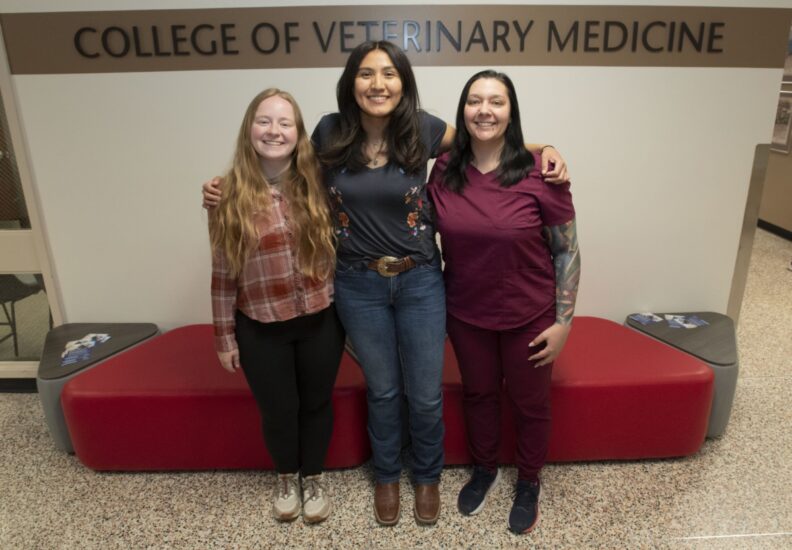
A team of Washington State University veterinary students recently placed fifth overall in the second annual Merck Veterinary Business Simulation, a highly competitive national event that drew students from more than 30 veterinary schools across the country.
WSU was represented by Veterinary Business Management Association members Melanie Kicker and Shyla Neugebauer, both third-year veterinary students, and Rochelle Hunt, a second-year student. Over several weeks, the team managed a simulated veterinary clinic, making strategic decisions related to staffing, pricing, patient demand and long-term growth.
The competition required students to analyze financial data and operational outcomes as they navigated a series of scenarios designed to mirror the challenges faced by modern veterinary practices. The WSU team advanced to the final round where they presented their clinic performance and strategic decisions to a board of directors composed of veterinary business professionals.
Throughout the simulation, the team worked closely with industry mentors and Dr. Richard DeBowes, professor and director of WSU’s Professional Life Skills Development Program, gaining hands-on experience with the financial and operational side of veterinary medicine. The mentorship included learning how to forecast patient demand, evaluate pricing strategies and make data-informed decisions that balanced profitability with quality patient care.
“It was a privilege to work with Dr. DeBowes and apply veterinary business concepts before his retirement,” Hunt said. “This experience challenged us to think critically about how forecasting, pricing and staffing decisions impact both profitability and patient care. Our team spent many late nights discussing strategy, and it was incredibly rewarding to see how those decisions translated into a successful practice within the simulation.”
The WSU team’s performance stood out for its preparation and thoughtful decision-making. Advancing to the final round required teams to consistently evaluate trade-offs between financial sustainability and quality of care, a challenge the students navigated effectively throughout the competition.
By placing fifth nationally, the students highlighted the College of Veterinary Medicine’s emphasis on business and leadership training alongside clinical education. The experience gave the team a practical look at the realities of practice ownership and management, skills they will carry forward as they move into their veterinary careers.