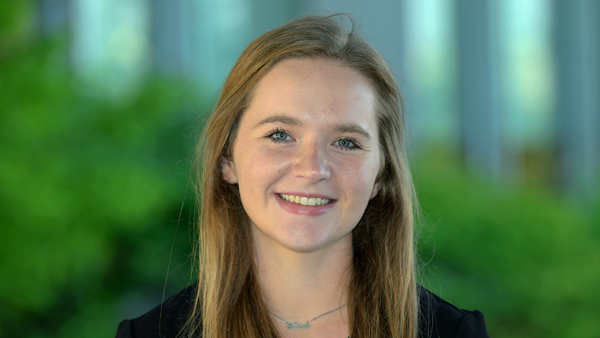
Before she ever set foot in a graduate classroom, Matteya Proctor was already deeply engaged in research through the WSU College of Veterinary Medicine’s Students Targeted toward Advanced Research Studies (STARS) program — an accelerated undergraduate pathway designed to prepare students for advanced research careers and graduate-level study. STARS immerses students in research beginning in their first year, pairs them with faculty and peer mentors, and offers specialized coursework, seminars, and presentation opportunities within a close-knit research community.
Through the STARS program, Proctor gained early, hands-on research experience, built lasting mentorships, and developed the technical and professional skills needed to succeed in graduate-level training. She is now pursuing a doctorate in neuroscience.
In the Q&A below, she shares how STARS shaped her undergraduate experience, supported her transition into graduate research, and helped prepare her for a long-term career in biomedical science.
Why did you decide to participate in the STARS program?
I honestly came across the STARS program on accident. I didn’t know that programs like this existed, and the concept of “research” in an academic setting was still relatively amorphous in my mind. However, I found the idea of being able to ask big questions and learn by directly participating in the pursuit of new knowledge very enticing and decided to apply! When I received the offer and learned more about how the program was structured, I was so grateful I had stumbled across the application. I knew I wanted to study neuroscience, and I knew I didn’t want to be a doctor, so research felt like the perfect opportunity to learn new things and set myself up for success in a PhD program, as well as network with people who could support me in deciding where I wanted to go longer-term.
What was your experience like as an undergraduate in the STARS program?
I had the most amazing experience as an undergraduate in the STARS program. I was emboldened by my cohort’s mentor, Dr. Bill Davis, to actively seek opportunities and advocate for myself in a large academic setting. Because of the STARS program, I became involved in research early in my academic career, rapidly learned about the world of biomedical research, and developed a network of amazing mentors and like-minded peers. Because of the STARS program, I had the flexibility to cater my academic journey to the things I specifically wanted to learn, and I had the resources to develop a strong support system who immensely helped me navigate the transition into my graduate program. I met some of my best friends through this program, and we often joke about how the selection committee could have known we would get along so well. Overall, I am immensely grateful to the program for the opportunities and the people it connected me with.
What opportunities did the STARS program give you that you might not have had in a traditional undergraduate program?
Without the STARS program, I would not have had the confidence or the knowledge to become involved in research as early as I did. My early involvement allowed me to develop my research interests and become involved in mentorship activities, which ultimately helped me with fellowship and graduate school applications. I gained so much confidence through sharing my research at conferences, traveled to really wonderful places, and made connections with other students and professionals who continue to bolster my experience as a student and a researcher.
In addition to professional and technical skills, the ST ARS program provided a small stipend each year, which helped to alleviate some of the financial pressure of paying for college. This financial support allowed me to dedicate more of my time to my research and ultimately set me up to begin earning research-specific scholarships and fellowships. This is not the most important opportunity that STARS offered, but an impactful opportunity, nonetheless.
As an undergraduate, what was your most memorable research project or experience in STARS?
My most memorable research project through STARS is a project that I completed in Dr. Maureen Schmitter-Edgecome’s Neuropsychology and Aging Lab. I worked in this lab for my final 2.5 undergraduate years and developed my honors thesis investigating the relationships between cognitive self-efficacy (i.e., someone’s belief if their ability to do something), cognitive abilities (i.e., memory, verbal fluency, executive functions, etc.), and performance on an internet-based health search task. This project perfectly blended my interests in neuropsychology and science/health communication and helped me develop skills in cognitive assessment and data analysis that have been integral to my graduate research so far. This project allowed me to participate in a competitive NIH fellowship focused on gerontechnology, travel to and present at several conferences, and led to several follow-up projects (one of which is currently under review!). Dr. Schmitter-Edgecombe is currently serving on my graduate committee and has continued to be an important mentor, and I gained lifelong friendships through the lab, as well.
Who were your mentors as an undergraduate in the STARS program and how did they help you?
Dr. Bill Davis was one of the most influential mentors I connected with through the STARS program. He directed the program when I first joined and led journal club-style discussions with my cohort each week during my freshman year (during COVID). His leadership is part of what helped my cohort become so comfortable with one another, establishing an important support system. Dr. Davis also provided specific advice and mentorship for me as I was learning to navigate the vast opportunities available through a large university; he knew how to ask the right questions to help me understand what I needed/wanted from my undergraduate education, as well as how to get there, and has maintained an open-door policy as I continue to periodically toss him questions about research and life.
Other very influential and helpful mentors I connected with through STARS include Dr. Schmitter-Edgecombe (mentioned above), Dr. Courtney Kurinec, and my graduate student mentors, Carolyn Pagán and Samina Rahman. Each of these individuals helped me grow as a student and researcher and modeled excellent mentorship qualities that have influenced my own leadership style. Additionally, though I met Dr. Gizerian through the neuroscience program, I am also extremely grateful for her involvement and familiarity with the program during the later part of my undergraduate career.
How did the foundation you built in the STARS program help you prepare for and adjust to graduate-level coursework and research?
The STARS program really emphasized early involvement in research, and provided the resources and knowledge needed to do so. I quickly gained experience with interpreting and critically evaluating research papers, exposure to rigorous study design and research practices relevant to my field, and practice communicating my work to professional audiences. As I’ve mentioned, my support system of mentors and peers has been and continues to be extremely helpful. I also think that my experience in STARS immensely strengthened my time management skills and helped me understand how best to allocate my time and energy. These skills have proven to be integral to adjusting to graduate-level coursework and research.
In what ways do you feel more prepared than other graduate students who didn’t go through an accelerated program like STARS?
There are arguably several avenues to getting into graduate school, but I do think that my participation in STARS was a key part of successfully transitioning into my graduate program. I gained experience in public speaking that prepared me for the presentation requirements in my program and for attending research conferences as a graduate student. I completed rigorous courses that closely paralleled those required for my graduate academic plan. I didn’t follow the traditional STARS plan as an undergraduate; I finished my undergraduate degrees in four years and didn’t join my undergraduate lab as a graduate student. However, my experience working in several labs as an undergraduate allowed me to precisely develop my research interests and critically select the graduate program and lab/s that best fit my interests and goals. This allowed me to shorten my rotations as a graduate student as well as to work with my graduate mentors to immediately cater my training plan to my specific goals.
How do you think the STARS program will help you stand out after you finish your doctorate?
My participation in the STARS program will help me stand out upon the completion of my doctorate by effectively demonstrating my commitment to research and allowing unique insight into how my research trajectory has developed and changed over time. However, I think the connections I have made throughout the program will be the most important. I have met current experts in my field as well as developed relationships with peers who will be the next generation of researchers, providing a vast network of people willing to advocate for me and collaborate in the next stages of my career. Additionally, this program has set me up to complete my graduate studies earlier in my career, without sacrificing my research portfolio.
What advice would you give to a student considering the STARS program?
I cannot recommend the STARS program highly enough. Interested and driven students can expect to learn professional and technical skills, gain experience in their field, and network with professionals and peers with similar interests. Any student passionate about asking big questions and learning new things every day will appreciate the program for these opportunities alone. However, they can also expect to learn to advocate for themselves as a student and researcher, travel to new places as they present their exciting work and meet wonderful people along the way. Quite simply, I would advise them to take advantage of the opportunity and proceed boldly.