Hometown: Sunnyside, WA
Undergraduate degree: Bachelor of Arts in English
Area of interest: Mixed Animal
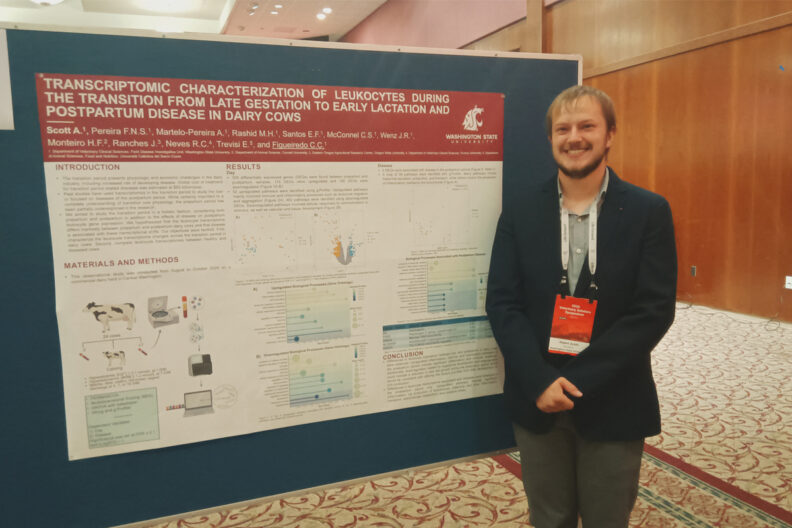
Aspen Scott, a member of the Class of 2029 at Washington State University, is using his summer research fellowship to explore how a dairy cow’s immune system changes during the transition from late pregnancy to early lactation. Working with Dr. Caio Figueiredo, Scott is applying advanced transcriptomic techniques to better understand the biological processes associated with health and disease during one of the most critical periods in a cow’s life.
Using RNA sequencing technology, Scott is analyzing the expression of more than 20,000 genes in white blood cells collected from dairy cows before and after calving. His research compares healthy cows with cows affected by transition-period diseases while also examining differences related to parity, liver health and physiological changes surrounding calving. By identifying differentially expressed genes and the biological pathways they influence, Scott hopes to better understand how the immune system responds to the challenges cows face during this period.
The project addresses a significant knowledge gap in dairy cattle research. While conditions such as metritis, ketosis and hypocalcemia can have major impacts on animal health and productivity, relatively little is known about how gene expression changes in immune cells before and after calving. Scott’s work may help lay the foundation for future tools that allow veterinarians and producers to identify health challenges earlier, improve animal welfare and make more informed treatment decisions. “Transcriptomics is the future of human medicine, and it is extremely likely to play a vital role in the future of veterinary medicine as well,” Scott said. “I got into veterinary medicine because I want to help people, and I would love to see my work used someday for improving diagnostics and cow welfare.”