The why of sleep
ScienceNews
ScienceNews
In September 2010 when he was only 8 months old, “Patch,” a black and white Coton-de-Tulear, tangled with a car while his owners were visiting friends in Walla Walla, Washington. After a local veterinarian examined Patch and saw the extent of his injuries, she immediately referred Dan and Kathy Schwartz of Seattle, Washington, to the […]
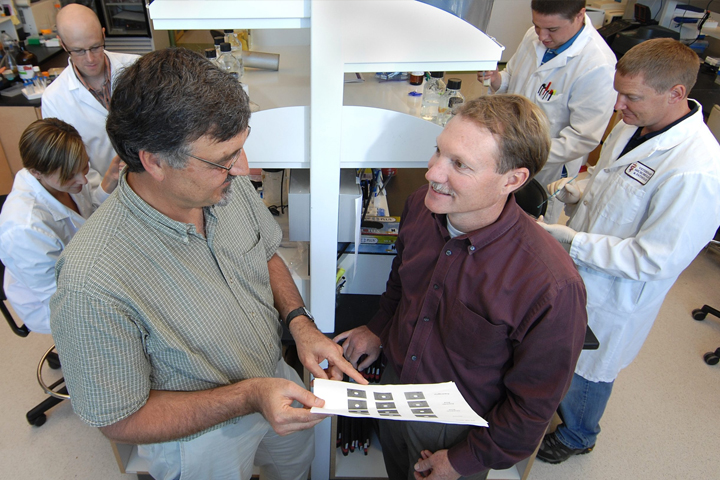
For the past seven years Dr. Mike Konkel, professor in the School for Molecular Biosciences, and Dr. Doug Call, professor in the Department of Veterinary Microbiology and Pathology, have been working together to find answers about how to better control some of the most serious disease causing bacteria found in our food supply.
“I believe the best work comes from collaboration,” said Dr. Konkel. “The key for us is we complement each other well. We have overlapping interests, but different expertise and are willing to be flexible and accommodate each other. That’s what makes a collaboration like ours last for so many years.”
Record of staff awards, 2002-2014
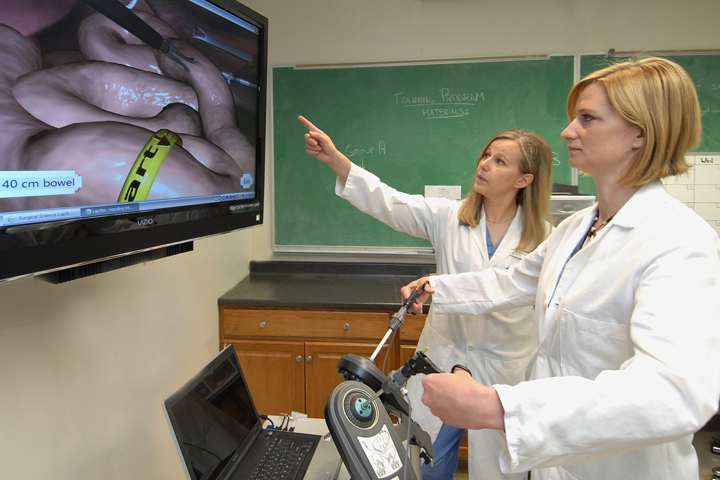
In a small, windowless room, four veterinarians simultaneously tie sutures, biopsy a liver, and perform minimally invasive abdominal surgery. No, this is not a typical operating room. It is a veterinary laparoscopic training laboratory—the first of its kind in the nation.
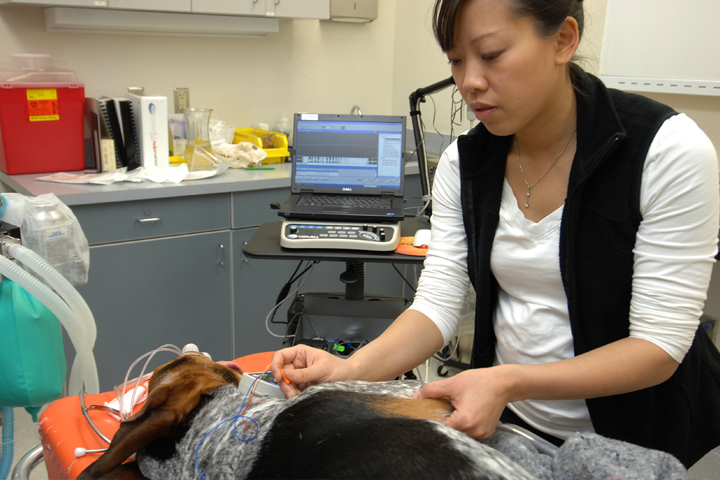
The WSU neurology service’s new Electrodiagnostics machine will help make advanced muscle and nerve disorder diagnoses thanks to a generous friend of the college. Electromyography (EMG) and nerve conduction velocity (NCV) are two of the medical tests veterinarians will be able to perform with the new equipment.
After a visit to a local veterinarian, Jack was referred to the WSU Veterinary Teaching Hospital. An MRI revealed what appeared to be a very large pituitary tumor.
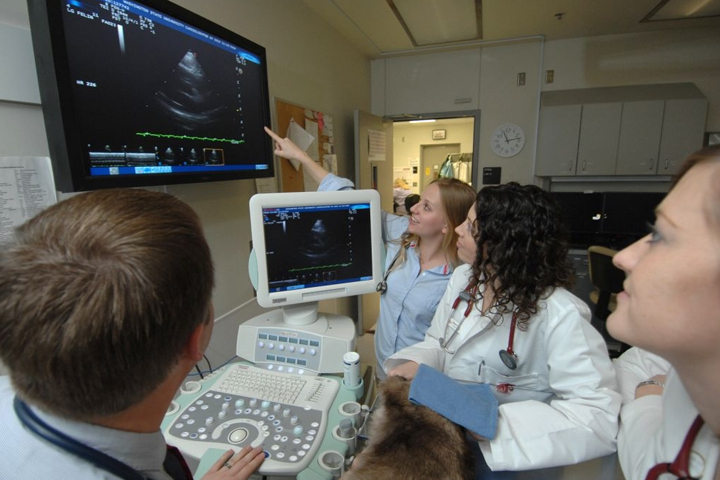
Students can now watch ultrasounds, radiographs (or x-rays), and other procedures more easily thanks to a new large screen TV monitor from a generous friend of the college. Before the WSU cardiology group received the monitor, veterinary students crowded around a small computer screen or viewing window. Now students can view procedures more easily and more students can watch procedures at the same time. Students will also be able to watch medical procedures, such as fluoroscopy, in real time.
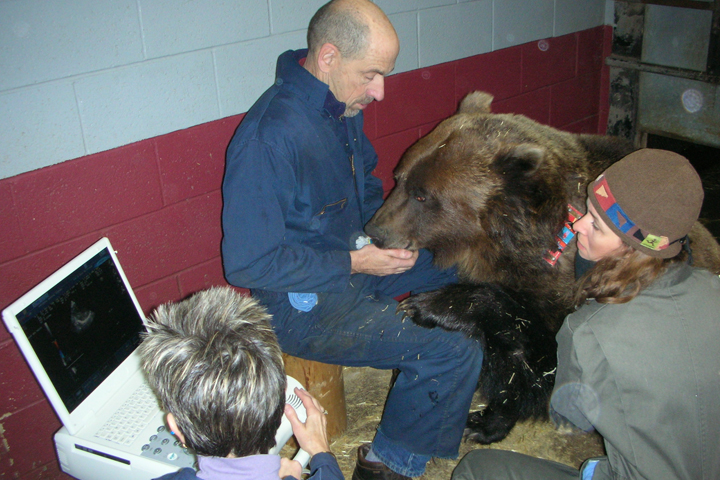
Patients at WSU’s Veterinary Teaching Hospital can now receive on-location cardiovascular diagnosis thanks to a new portable echocardiograph from a generous friend of the college.
“We are very grateful to have this machine.” said Dr. Lynne Nelson, a WSU veterinary cardiologist. “This echo is the latest, state-of-the-art, portable machine. Because it is portable, we can take it to a sick horse, kitten, or any animal.”
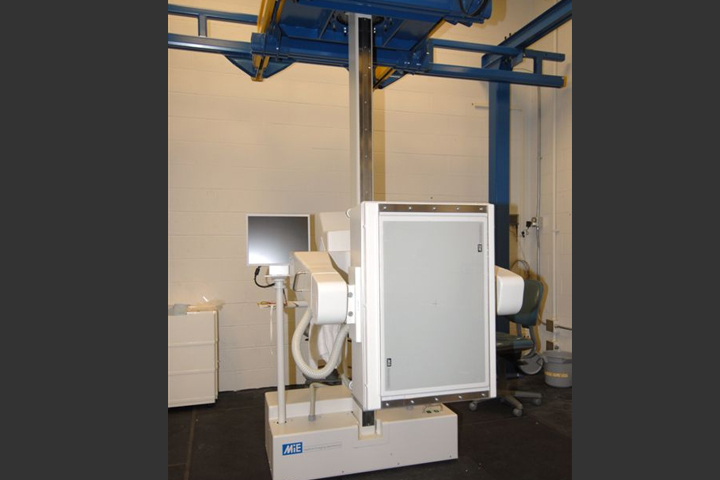
The exact cause of lameness in horses can sometimes be difficult to find. But thanks to a generous donor, the WSU College of Veterinary Medicine’s new gamma camera will make diagnosis easier.
“The gamma camera is essential for equine orthopedic lameness,” says Dr. Kelly Farnsworth assistant professor in WSU’s Veterinary Clinical Sciences department. “Localized lameness is difficult to radiograph.”