
It has been quite a month. Last month I hinted that we were preparing for our American Veterinary Medical Association Council on Education accreditation site visit. That happened. And the outcome was positive (lest you were concerned). We do not have the final report but verbal highlights from the site team included recognition of our stellar simulation-based education program, including communications training, our highly acclaimed Diagnostic Challenge curriculum, our admissions team and admissions process, our Washington Animal Disease Diagnostic Laboratory (WADDL) facility, our Seattle Humane collaboration, and our research facilities and programming. They recognized us for financial stability and a stable, well-credentialed faculty. We all breathed a sigh of relief and gratitude. In the end, it was fun showing off our program. There will be some issues to address, but all within reason.
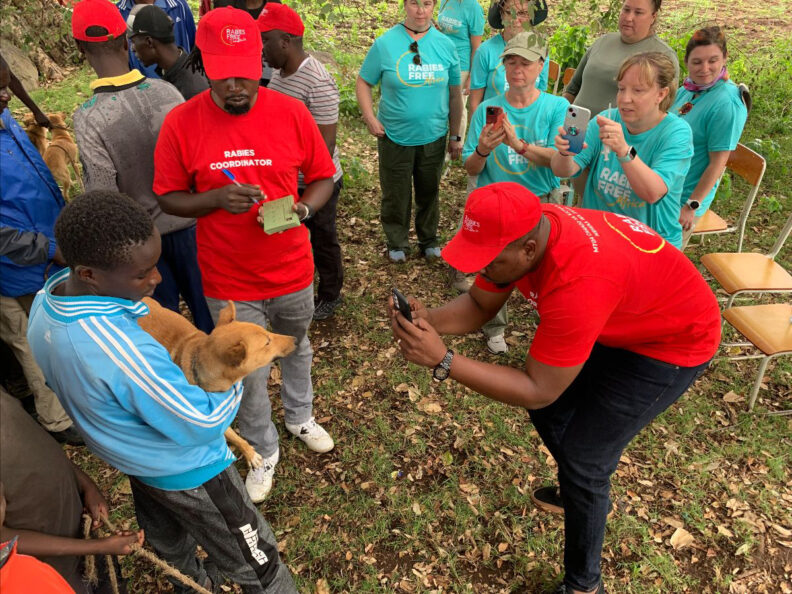
Soon after, I flew to East Africa to visit two of our flagship programs: our Rabies Free Africa (RFA) program in Tanzania and our research and education programs at the University of Nairobi in Kenya. In Tanzania, we hosted 12 veterinarians who work for Vetcor, a collaborative network of veterinary practices across the U.S. and Canada. Recently, Vetcor partnered with RFA to donate $1 for every rabies vaccine they administer at participating practices. In deep appreciation for their partnership, Vetcor sponsors a few veterinarians to come to Tanzania to experience the program. Some of these veterinarians were deeply familiar with international travel and loved Africa already. Some were openly and humbly outside of their comfort zone. All were spirited, engaged, and hardworking. Giving back in our profession truly sustains us and reminds us why we do what we do. Seeing is believing and they will become wonderful ambassadors for our program.
What is so special about our RFA initiative? Our faculty and staff know local problems are best solved with innovative local solutions. We know true sustainability means connections to government agencies, research institutes, and academic institutions. Programs ultimately survive if they elicit community and government support, which is why it is important that we collect data to highlight economic and health impact. Tanzania is a perfect country to catalyze this transition from an American donor-based program to a sustainable institution maintained by Tanzania for Tanzania.
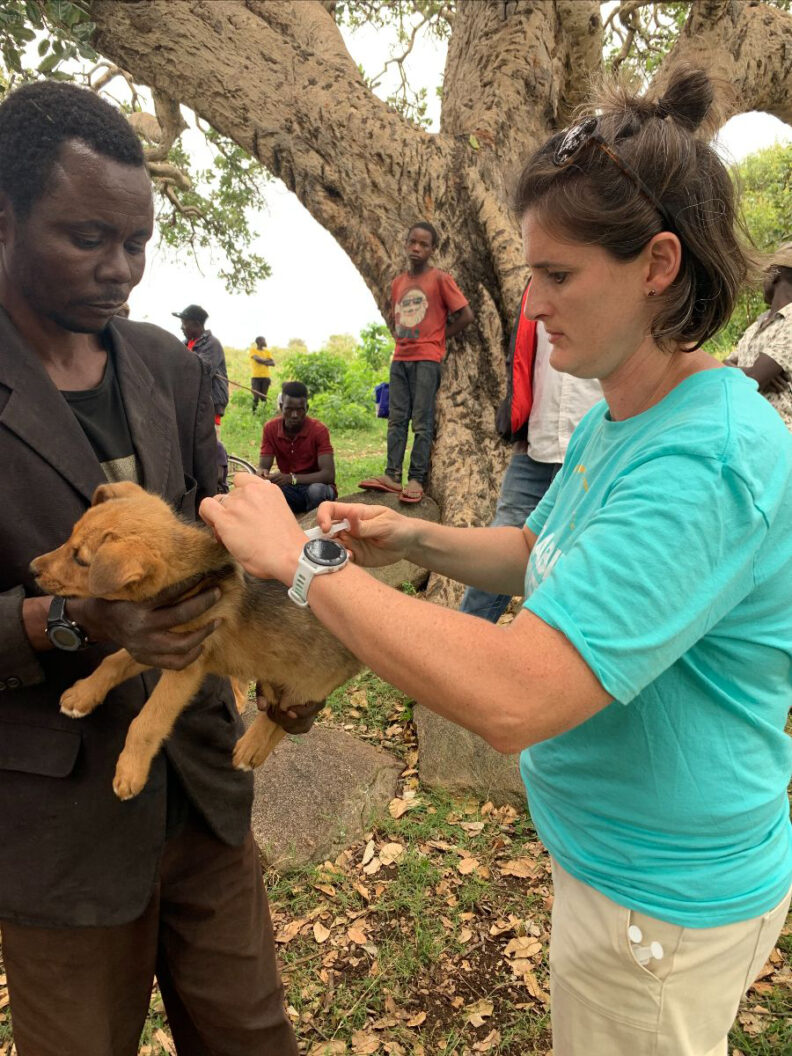
Why? Rabies is a 100% preventable disease with a truly effective vaccine. Rabies has a critical impact on human health, mostly children; wildlife health, as dogs transmit rabies to wildlife in the Serengeti; and dog health. In Tanzania villages, stray dogs are rare. Dogs are a part of the extended family unit as they provide important jobs – security and herding with the young boys that care for them. Community health care workers are embedded in the villages – investment in these positions provide workforce development opportunities for local boys and girls. As dogs become vaccinated, they elicit less fear and the human-animal bond takes hold and grows.
Every time I visit our International Global Health programs, I re-understand the deep connection between animal health, human health and environmental health, and I see the role of WSU and our college so clearly. We have an enduring commitment in East Africa, and it is a critical part of our community outreach and land grant mission. Go Cougs.
If you’d like to know more, you can always read the latest stories from our college on our news page. For even more content, follow us on Facebook and Instagram, and TikTok.
Be safe, healthy, happy, and stay hopeful.
Take care, Dori Borjesson