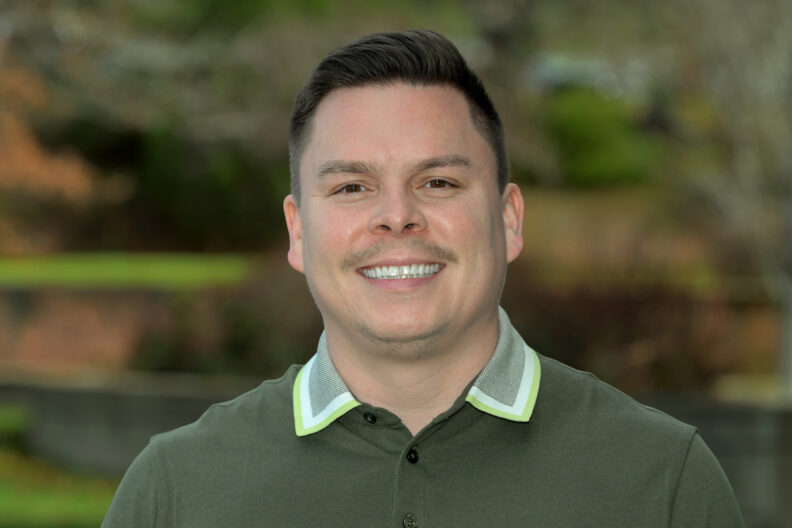
Dr. Cole Allick, an assistant professor of public health in the Paul G. Allen School for Global Health and citizen of the Turtle Mountain Band of Chippewa Indians, works at the intersection of public health, policy, and Indigenous knowledge. His research aims to create more equitable systems and strengthen policy outcomes in Tribal communities through culturally grounded approaches.
Dr. Allick completed his Master of Health Administration at the University of Washington and PhD in Indigenous health at the University of North Dakota.
He recently took time to discuss his research and other topics.
What are your current research interests and what attracted you to that area?
My research focuses on advancing health equity among American Indian and Alaska Native communities through community-engaged approaches to public health policy, cancer prevention, and aging research. I’m particularly interested in research readiness and developing Indigenous-centered frameworks for quantitative and policy research that strengthen Tribal sovereignty in data and decision-making.
I was drawn into aging research during my PhD, at a time when my last living grandparent, my Grandma Jo, became ill and eventually passed away. That experience deeply shaped how I view health and legacy — much of my work today is a way to honor her and stay connected to the generations before and after me.
At its core, my research is guided by a commitment to sovereignty and self-determination in health — ensuring that Tribal Nations define, lead, and benefit from the research that impacts them. I work to build pathways for that vision through community advisory structures, capacity-building, and translating research into sustainable policy change.
What do you ultimately hope to accomplish with your research?
Ultimately, I hope my work contributes to systems change — where Tribes have sustained infrastructure, data capacity, and policy power to advance their own health priorities. I want to help build a future where Indigenous health research isn’t an “exception” within mainstream science, but a respected and central model for how ethical, community-driven research should be done.
If my work can play a small part in expanding that visibility, mentoring new Indigenous scholars, and improving real health outcomes, then I’ll consider it a success.
What do you enjoy about working with students?
I love seeing students make connections between what we talk about in class and their own lived experiences or communities. Watching that “click” moment — when they realize that public health and policy aren’t abstract ideas, but tools for real change — is incredibly rewarding.
Many of my students come from diverse or underrepresented backgrounds, so it’s meaningful to create spaces where they feel seen, supported, and capable of shaping the future of health equity.
What motivates you outside of work?
Community and connection keep me grounded — whether that’s spending time with family and friends, being active, or coaching volleyball. I also find motivation in the same principles that drive my professional work: reciprocity, growth, and balance.
Outside of academia, I try to stay connected to culture, wellness, and movement — all of which remind me why the work matters in the first place.
What advice would you give to younger people considering a career in science?
Don’t lose sight of who you are or where you come from — those roots are your greatest strength. Science needs your perspective, your questions, and your community’s values.
Find mentors who see your potential, not just your productivity, and remember that the best scientists are also great listeners and collaborators.
And finally, take your time. The most meaningful science often moves at the pace of trust.