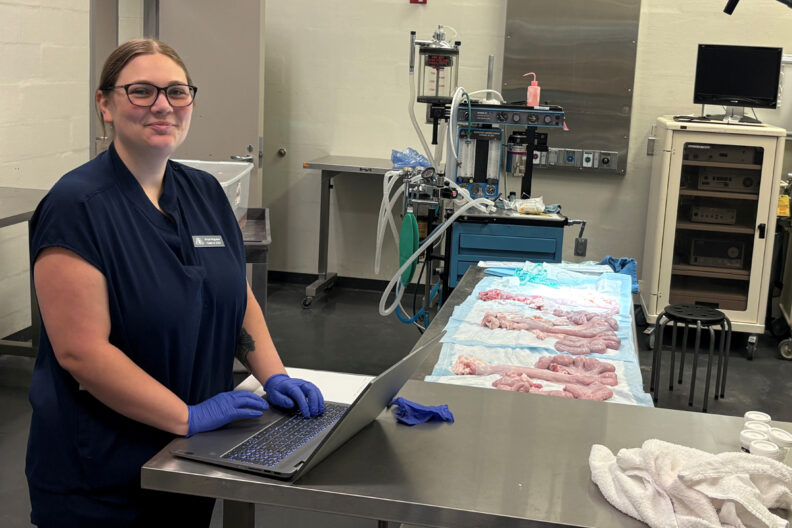
Hometown: Fort Lauderdale, FL
Undergraduate degree: Biology (Texas A&M)
Area of interest: Small Animal Emergency and Surgery
Airyel Noguera, a DVM student in the Class of 2029, is using her summer research fellowship to investigate how genetically engineered pigs can be produced more efficiently for biomedical research. Working with Dr. Michela Ciccarelli, Noguera is conducting a systematic review and meta-analysis to identify factors that improve reproductive success when producing these valuable animal models.
Genetically engineered pigs play an important role in studying human disease because their anatomy and physiology closely resemble those of people. However, producing these models remains a complex process with relatively low success rates.
Noguera’s research brings together findings from studies published over the past decade to evaluate reproductive outcomes, including embryo production, embryo transfer, pregnancy establishment, and live-born piglet production. By comparing different production methods and identifying factors associated with improved success, her work aims to highlight best practices.
Alongside the review, Noguera is also participating in a related project evaluating embryo transfer techniques. The team is examining reproductive tissues from female slaughter pigs to determine whether new embryo transfer instruments reduce abrasion to the oviduct, information that could help refine transfer procedures.
Ultimately, the research seeks to improve the efficiency of producing genetically engineered pigs for translational research while supporting standardized methods and reducing animal use.
Noguera says the project closely aligns with her professional goals in surgery and translational research.
“This mentored experience represents a unique intersection of my clinical interests and my career goal to become a veterinary scientist capable of bridging the gap between innovation and clinical application,” she said.