Hometown: Seattle, WA
Undergraduate degree: Animal Science (WSU)
Area of interest: Undetermined
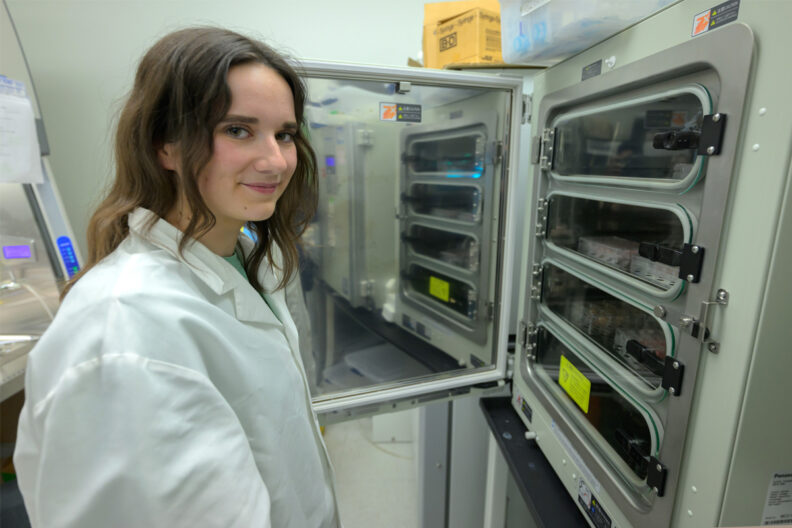
Hanna Meyer, a member of the Class of 2028, is using her summer research fellowship to explore how gene editing could help improve cattle health and reduce the impact of bovine respiratory disease (BRD), one of the most costly health challenges facing the U.S. cattle industry.
Working with Dr. Jon Oatley, Meyer’s project focuses on using CRISPR-Cas9 gene-editing technology to introduce a targeted genetic change that could make cattle resistant to infection caused by Mannheimia haemolytica, the primary bacterial agent responsible for BRD.
The disease contributes to billions of dollars in losses each year through animal illness, treatment costs and reduced productivity. Meyer’s research builds on the discovery that a single amino acid change in the CD18 gene may prevent the effects of M. haemolytica infection, creating the possibility of developing cattle with increased natural resistance to BRD.
To evaluate this approach, Meyer is working to develop a cell-based model that can test whether the genetic change provides resistance to bacterial toxins. She is also optimizing the timing of embryo electroporation, a technique used to introduce CRISPR-Cas9 editing tools into embryos, with the goal of improving gene-editing efficiency.
If successful, Meyer’s work could help lay the foundation for future efforts to develop healthier, more resilient cattle while advancing the use of biotechnology in veterinary medicine and agriculture. Meyer says the fellowship is allowing her to continue building her research skills while contributing to a project with meaningful implications for animal health.